
BPC-157 peptide attracts interest for tendon injuries, muscle recovery, joint discomfort, and digestive health. Its appeal comes from experiments showing effects on tissue repair, alongside a small number of human reports.
The central question is how well those findings translate into reliable treatment. Potential benefits have a research basis, but an effective human recovery protocol remains unestablished. Even the published intravenous safety pilot involved just two people and very short follow-up.[1]
This guide examines BPC-157 benefits, dosage questions, side effects, oral versus injected forms, and what the available evidence actually means for someone considering it.
What Is BPC-157 Peptide?
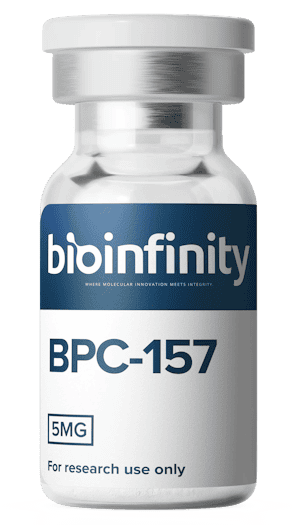
BPC-157 stands for Body Protection Compound-157. It is a synthetic chain of 15 amino acids, also called a pentadecapeptide, developed through research into gastric protection. Papers sometimes use the research code PL-14736.[2]
That gastric association helps explain interest in digestive applications. It does not make a commercial BPC-157 preparation equivalent to a naturally occurring stomach secretion.
The name also appears on products containing several peptides. A BPC-157 blend has a different ingredient profile from BPC-157 alone, which matters when comparing studies or attributing a reaction.
For context on other compounds discussed in this category, see our guide to peptides for anti-aging.
How Does BPC-157 Work?
Researchers have investigated several repair-related processes:
- Cell movement and survival: Tendon experiments found increased migration of fibroblasts, cells involved in maintaining connective tissue, and improved survival under experimental stress.[3]
- Blood-vessel signaling: Cell and animal work linked BPC-157 to VEGFR2 signaling and angiogenesis, the formation of blood vessels.[4]
- Vascular relaxation: A 2026 experiment found nitric oxide-dependent relaxation in human artery segments collected during surgery.[5]
The artery experiment studied isolated tissue; patients were not given BPC-157 to test recovery or cardiovascular outcomes.
Together, these findings suggest plausible biological pathways. They do not establish which pathway determines a clinical benefit, what exposure is needed, or whether the same effect occurs with a purchased capsule or injection.
BPC-157 Benefits: What Does Research Show?
Tendon, Ligament, and Joint Research
BPC-157 for tendon healing is among its most discussed applications. Laboratory work supports effects on tendon-cell migration and outgrowth. A separate rat study following surgically divided knee ligaments reported improvements in function, tissue appearance, and biomechanical measures during recovery.[3][6]
Results are not uniformly positive across experiments. In a 2026 rat Achilles-repair comparison, BPC-157 alone produced a numerical increase in maximum load, but that difference was not statistically significant. The combination with the preparation labeled TB-500 showed no additional benefit over the individual agents under the study conditions.[7]
The small human knee-pain report is encouraging but answers a narrower question: some recipients reported feeling better. Its design could not establish that BPC-157 rebuilt cartilage or repaired a torn tendon.[8]
For a reader with an injury, pain relief, restored strength, and healed tissue are separate outcomes. A study measuring one cannot automatically establish the others.
The injury model matters, too. A freshly divided ligament in a laboratory animal differs from a longstanding overuse problem in a person. Results should be interpreted in the context of the tissue and injury actually studied.
Muscle Injury and Exercise Recovery
In rats with a crushed calf-muscle complex, BPC-157 treatment improved several measures of recovery, including tissue findings and function.[9]
A 2025 rat experiment examined another severe injury: surgical detachment of the quadriceps from its attachments. Researchers reported improved muscle-to-bone reattachment and functional recovery with oral treatment.[10]
These models explain scientific interest in muscle repair. Neither establishes greater muscle growth, less ordinary post-workout soreness, or faster recovery between gym sessions in people. Those claims require studies with those specific outcomes.
The registered hamstring trial plans to assess return to unrestricted sport and MRI changes. These outcomes are directly relevant to athletes, although results are still needed before drawing conclusions about treatment benefit.[11]
Gut Health and Gastrointestinal Repair
Digestive research includes rats with intestinal blood-flow disruption and reperfusion injury, where BPC-157 improved experimental mucosal and vascular findings.[12]
Another rat study examined a surgically created duodenocolic fistula, an abnormal connection between intestinal segments. Treatment improved healing in that model.[13]
Human ulcerative-colitis research also exists. FDA’s 2026 evaluation discusses a 53-person randomized study reported as a meeting abstract, using rectal enemas for two weeks. FDA found the available information inadequate to establish efficacy and safety.[2]
These conditions and delivery methods differ substantially. The findings do not establish that BPC-157 capsules treat IBS, Crohn’s disease, or nonspecific digestive symptoms. A claim about “gut healing” needs to identify the condition, formulation, and outcome being discussed.
Wound Healing, Inflammation, and Pain
In rats with chemical skin burns, topical BPC-157 accelerated wound closure and improved several tissue-repair measures. Associated cell experiments explored migration and blood-vessel formation.[14]
A separate rat incision experiment found short-lived reductions in certain pain responses. That is evidence about an experimental pain model, without establishing durable pain relief in patients.[15]
These distinctions matter when evaluating broad anti-inflammatory claims. Reduced swelling, altered signaling, wound closure, and reduced pain are different findings; none alone demonstrates that a peptide treats every inflammatory condition.
What Have Human BPC-157 Studies Found?
Three published reports often appear in discussions of BPC-157:
| Study | What was reported | Main limitation |
|---|---|---|
| Knee pain, 2021 | Among 16 people reached for follow-up, 14 reported improvement after BPC-157 alone or with thymosin beta-4. | Retrospective, uncontrolled, mixed diagnoses and treatments; no proof of structural repair.[8] |
| Interstitial cystitis, 2024 | Twelve women reported substantial symptom improvement after local injections around inflamed bladder areas. | Uncontrolled pilot; this was a bladder procedure, not intravenous treatment.[16] |
| Intravenous safety, 2025 | Two previously exposed participants had no reported adverse effects or changes in selected laboratory measures. | Extremely small sample and brief follow-up cannot establish general safety.[1] |
In the knee series, improvement was reported by 11 of 12 BPC-157-only recipients and three of four combination recipients. Those tiny, nonrandomized groups cannot establish which treatment works better. Without a comparison group, natural recovery and other care remain possible explanations for improvement.[8]
A registered randomized hamstring-injury trial, NCT07437547, lists estimated enrollment of 120 and compares BPC-157 with placebo alongside rehabilitation. The registry record checked for this article had no posted results; its last update was February 2026. Planned enrollment is not a completed patient sample.[11]
Oral BPC-157 vs. Injections: Does the Form Matter?
Yes. The route used in a study is part of the evidence, not an interchangeable detail.
| Form or route | Evidence to consider | Unanswered question |
|---|---|---|
| Oral preparations | Some animal experiments report effects after oral delivery. | Whether a particular human capsule provides effective exposure and clinical benefit.[10] |
| Joint or bladder injections | Small human reports used local procedures. | Whether findings transfer to a different condition or injection route.[8][16] |
| Intravenous or intramuscular administration | Pharmacokinetics were studied in rats and dogs; the human IV pilot was very small. | Reliable human comparisons of absorption, effectiveness, and safety across routes.[17][1] |
Resistance to digestion, absorption into blood, and successful treatment are three different questions. Animal pharmacokinetic measurements cannot establish a human capsule’s bioavailability.
An oral product would need its own evidence for the intended condition. Likewise, bypassing digestion with an injection does not automatically produce better outcomes. A useful comparison would test defined products in comparable patients and measure both benefit and harm.
Similarly, a salt name such as “acetate” does not demonstrate superior effectiveness. Formulation, ingredient identity, and manufacturing quality must be considered individually.[2]
BPC-157 Dosage: What Is Actually Established?
There is no established standard BPC-157 dosage for the broad injury-recovery and wellness uses promoted online. The human reports involve different conditions, procedures, and observation periods; they do not define a general regimen.[8][16][1]
For example, the IV pilot administered 10 mg on the first day and 20 mg on the second to two previously exposed participants. Those are study details, not a recommended starting dose or evidence supporting home injections.[1]
The registered hamstring study describes daily subcutaneous administration for 14 days, but a protocol without posted results cannot establish an effective treatment schedule.[11]
When reading product labels or dosage discussions, separate these terms:
- Total content: A vial labeled 5 mg contains that stated amount in the whole vial; it does not necessarily represent one administration.
- Amount: One milligram equals 1,000 micrograms. Confusing the abbreviations mg and mcg creates a thousand-fold difference.
- Concentration: Milligrams per milliliter describe how much ingredient is present in a volume of solution.
- Volume: Syringe markings measure volume according to the syringe’s calibration. “Units” alone cannot identify the amount of peptide without the concentration.
None of these conversions determines what dose is appropriate. Instructions cannot be transferred between products with different concentrations.
An animal dose expressed per kilogram also cannot simply be multiplied by a person’s weight. Species differences in exposure and metabolism make that shortcut unreliable.[17]
The same uncertainty applies to cycle length, repeated courses, and injecting near an injury. A clinician discussing BPC-157 should explain what evidence supports the proposed route, dose, duration, monitoring, and alternatives.
BPC-157 Side Effects and Safety
Reliable frequencies for BPC-157 side effects have not been established. The two-person IV report cannot show that adverse reactions are rare.[1]
FDA’s 2026 briefing describes adverse-event reports involving local reactions, shortness of breath, and skin or gum darkening. Other substances and incomplete information complicate attribution; reports are not proof that BPC-157 caused each symptom.[2]
The main safety questions include:
- Immune reactions: FDA identifies potential immunogenicity and concerns about peptide-related impurities and ingredient characterization. Immunogenicity means the potential to trigger an immune response; its clinical frequency is unknown here.[18]
- Product quality: Contamination or excessive ingredient content can cause serious harm with compounded drugs. A product’s availability does not establish its quality.[19]
- Incomplete long-term evidence: A preclinical program reported broadly reassuring results under tested conditions, including mild local irritation. Animal testing does not settle long-term human safety or safety during pregnancy and breastfeeding.[20]
Angiogenesis findings also raise questions about growth signaling. They establish neither that BPC-157 causes cancer nor that it is safe for someone with cancer.[4] Medication interactions likewise lack a well-established clinical profile; disclose other drugs and supplements when discussing treatment.
BPC-157 was included in FDA’s July 2026 compounding advisory agenda. Such committees provide nonbinding recommendations. A compounding-policy discussion is separate from approval of a finished medicine, and compounded drugs are not FDA-approved.[21][19]
If a reaction occurs, seek medical assessment rather than assuming it is an expected part of treatment.
BPC-157 Results: How Long Does It Take to Work?
There is no validated universal timeline for BPC-157 results. Experimental healing schedules and uncontrolled symptom reports cannot establish that a human tendon should recover within a specific number of weeks.[7][8]
Track outcomes that match the problem: pain during activity, strength, range of motion, and the ability to resume normal tasks. Feeling better does not independently prove tissue repair. Rehabilitation and concurrent treatment also make it difficult to attribute improvement to a peptide alone.
Frequently Asked Questions
Is BPC-157 FDA-Approved?
No. BPC-157 is not an ingredient in an FDA-approved drug. Compounding considerations do not change that approval distinction.[2][19]
Is BPC-157 a Steroid or Growth Hormone Peptide?
It is a peptide, not an anabolic steroid. A study found increased growth-hormone receptor expression in rat tendon cells; it did not demonstrate increased circulating growth hormone in people.[22]
Does BPC-157 Need to Be Injected Near an Injury?
No human comparative evidence cited here establishes that rule. A knee-joint injection study cannot validate injecting under the skin near any painful body part.[8]
Is BPC-157 Better When Combined With TB-500?
Human superiority is unproven. The knee report used thymosin beta-4, while FDA identifies TB-500 as a specific fragment. Those names should not be treated as interchangeable. A recent rat comparison also found no added combination benefit under its tested conditions.[8][18][7]
Conclusion
BPC-157 peptide has a substantial experimental research history involving connective tissue, muscle, intestinal injury, and wounds. Human studies remain too limited to establish dependable recovery benefits or a standard regimen. Evaluate any proposal by its exact ingredients, relevant human evidence, administration route, meaningful outcomes, and safety information. Those details are more useful than a promised recovery timeline.
References
Journal references link to original studies indexed by NIH’s PubMed. Indexing does not imply NIH endorsement. Government sources provide regulatory context and trial-registration information.
- Lee E, Burgess K. Safety of Intravenous Infusion of BPC157 in Humans: A Pilot Study. Altern Ther Health Med. 2025;31(5):20-24. ↩
- U.S. Food and Drug Administration. BPC-157 (free base) and BPC-157 acetate: evaluation for the Pharmacy Compounding Advisory Committee. Briefing materials for July 23–24, 2026. Accessed September 13, 2026. ↩
- Chang CH, Tsai WC, Lin MS, Hsu YH, Pang JH. The promoting effect of pentadecapeptide BPC 157 on tendon healing involves tendon outgrowth, cell survival, and cell migration. J Appl Physiol (1985). 2011;110(3):774-80. doi:10.1152/japplphysiol.00945.2010. ↩
- Hsieh MJ, Liu HT, Wang CN, Huang HY, Lin Y, Ko YS, et al. Therapeutic potential of pro-angiogenic BPC157 is associated with VEGFR2 activation and up-regulation. J Mol Med (Berl). 2017;95(3):323-333. doi:10.1007/s00109-016-1488-y. ↩
- Yildirim AK, Dastan AO, Demeli Ertus M, Ensarioglu M, Karabacak K, Pehlivanoglu B. Endothelium-Dependent Nitric Oxide-Mediated Vasorelaxant Effects of BPC 157 in Human Internal Mammary Artery. J Clin Med. 2026;15(9). doi:10.3390/jcm15093488. ↩
- Cerovecki T, Bojanic I, Brcic L, Radic B, Vukoja I, Seiwerth S, et al. Pentadecapeptide BPC 157 (PL 14736) improves ligament healing in the rat. J Orthop Res. 2010;28(9):1155-61. doi:10.1002/jor.21107. ↩
- Biçer O, Adanir O, Güleryüz Y, Balci EC, Dinçel YM, Yenigün MY, et al. Effects of BPC-157 and TB-500 on Achilles tendon healing in rats: A histopathological and biomechanical study. Jt Dis Relat Surg. 2026;37(3):822-837. doi:10.52312/jdrs.2026.2951. ↩
- Lee E, Padgett B. Intra-Articular Injection of BPC 157 for Multiple Types of Knee Pain. Altern Ther Health Med. 2021;27(4):8-13. ↩
- Novinscak T, Brcic L, Staresinic M, Jukic I, Radic B, Pevec D, et al. Gastric pentadecapeptide BPC 157 as an effective therapy for muscle crush injury in the rat. Surg Today. 2008;38(8):716-25. doi:10.1007/s00595-007-3706-2. ↩
- Matek D, Matek I, Staresinic E, Japjec M, Bojanic I, Boban Blagaic A, et al. Stable Gastric Pentadecapeptide BPC 157 as Therapy After Surgical Detachment of the Quadriceps Muscle from Its Attachments for Muscle-to-Bone Reattachment in Rats. Pharmaceutics. 2025;17(1). doi:10.3390/pharmaceutics17010119. ↩
- Hudson Biotech. ClinicalTrials.gov. NCT07437547: BPC-157 for acute Grade II hamstring strain. Sponsor-submitted trial registration. Record last updated February 27, 2026; no posted results at access on September 13, 2026. ↩
- Duzel A, Vlainic J, Antunovic M, Malekinusic D, Vrdoljak B, Samara M, et al. Stable gastric pentadecapeptide BPC 157 in the treatment of colitis and ischemia and reperfusion in rats: New insights. World J Gastroenterol. 2017;23(48):8465-8488. doi:10.3748/wjg.v23.i48.8465. ↩
- Vukusic D, Zenko Sever A, Sever M, Drmic D, Milavic M, Sikiric S, et al. Duodenocolic fistula healing by pentadecapeptide BPC 157 in rats. A cytoprotection viewpoint. J Physiol Pharmacol. 2024;75(1). doi:10.26402/jpp.2024.1.09. ↩
- Huang T, Zhang K, Sun L, Xue X, Zhang C, Shu Z, et al. Body protective compound-157 enhances alkali-burn wound healing in vivo and promotes proliferation, migration, and angiogenesis in vitro. Drug Des Devel Ther. 2015;9:2485-99. doi:10.2147/DDDT.S82030. ↩
- Jung YH, Kim H, Kim H, Kim E, Baik J, Kang H. The anti-nociceptive effect of BPC-157 on the incisional pain model in rats. J Dent Anesth Pain Med. 2022;22(2):97-105. doi:10.17245/jdapm.2022.22.2.97. ↩
- Lee E, Walker C, Ayadi B. Effect of BPC-157 on Symptoms in Patients with Interstitial Cystitis: A Pilot Study. Altern Ther Health Med. 2024;30(10):12-17. ↩
- He L, Feng D, Guo H, Zhou Y, Li Z, Zhang K, et al. Pharmacokinetics, distribution, metabolism, and excretion of body-protective compound 157, a potential drug for treating various wounds, in rats and dogs. Front Pharmacol. 2022;13:1026182. doi:10.3389/fphar.2022.1026182. ↩
- U.S. Food and Drug Administration. Certain Bulk Drug Substances for Use in Compounding that May Present Significant Safety Risks. BPC-157 and thymosin beta-4 fragment entries. Accessed September 13, 2026. ↩
- U.S. Food and Drug Administration. Understanding the Risks of Compounded Drugs. Accessed September 13, 2026. ↩
- Xu C, Sun L, Ren F, Huang P, Tian Z, Cui J, et al. Preclinical safety evaluation of body protective compound-157, a potential drug for treating various wounds. Regul Toxicol Pharmacol. 2020;114:104665. doi:10.1016/j.yrtph.2020.104665. ↩
- U.S. Food and Drug Administration. July 23–24, 2026: Meeting of the Pharmacy Compounding Advisory Committee. Meeting agenda and advisory committee role. Accessed September 13, 2026. ↩
- Chang CH, Tsai WC, Hsu YH, Pang JH. Pentadecapeptide BPC 157 enhances the growth hormone receptor expression in tendon fibroblasts. Molecules. 2014;19(11):19066-77. doi:10.3390/molecules191119066. ↩
