

No matter which branch of the U.S. military a recruit plans to enter, meeting physical fitness requirements is a mandatory part of basic training preparation.
While fitness standards and testing formats vary by service, all branches require a baseline level of strength, endurance, and cardiovascular conditioning.
This guide outlines a structured 30-day workout approach designed to help candidates prepare for common military fitness test demands.
The Military Fitness Test
While there may be some variation depending on the branch of service, the following tables reflect historical Army Physical Fitness Test (APFT) standards that were previously used for reference:
| Level of Performance | Points | Push-Ups | Sit-Ups | 2 Mile Run |
|---|---|---|---|---|
| Maximum | 100 | 71 | 78 | 13:00 |
| Outstanding | 90 | 64 | 72 | 13:42 |
| Excellent | 75 | 53 | 63 | 14:48 |
| Good | 60 | 42 | 53 | 15:54 |
| Satisfactory Medium | 50 | 35 | 47 | 16:36 |
| Probationary | 45 | 31 | 44 | 17:00 |
And here are the standards for females in the same age bracket:
| Level of Performance | Points | Push-Ups | Sit-Ups | 2 Mile Run |
|---|---|---|---|---|
| Maximum | 100 | 42 | 78 | 15:36 |
| Outstanding | 90 | 36 | 72 | 16:24 |
| Excellent | 75 | 28 | 63 | 17:42 |
| Good | 60 | 19 | 53 | 18:54 |
| Satisfactory Medium | 50 | 13 | 47 | 19:42 |
| Probationary | 45 | 11 | 44 | 20:06 |
Type of Workout
Can you confidently execute 53 push-ups within two minutes? How about a two-mile run in under 13 minutes?
If seeing these requirements is a bit of a reality check, you’re not alone.
Instead of worrying whether or not you’ll be able to pull it off, let’s focus on how you can get into perfect shape to crush the fitness test.
One of the best ways to train for this military fitness test is by combining a full-body resistance training program with high-intensity cardiovascular work.
The idea behind this type of workout is that you’ll challenge all of your major muscle groups at the same time, increasing strength, muscle mass, and endurance.
Best of all, you’ll improve the neuromuscular communication between muscle, tendon, and connective tissue.
In other words, you won’t just be stronger; your body will function better overall.
Related Article – How To Lose Weight For The Military
Resistance Training and Periodization

For the full-body workout, you will hit each major muscle group twice per week using weight-based resistance training.
You’ll also cycle through four stages of fitness benefits.
In this way, you’ll achieve all of these benefits if you use this workout program consistently.
As you move from stage to stage, you will increase the number of sets and how much weight you use while decreasing the number of repetitions.
- Endurance: Refers to the stamina of your muscles. Use 50% to 60% of your one-repetition maximum (1RM) or the maximum amount of weight you can lift one time.
- Muscle Growth: Size and leanness of your muscles. Use 60% to 70% of your 1RM.
- Strength: How much you can safely lift, pull, or move. Use 70% to 80% of your 1RM.
- Power: Amount of raw force you can generate. Use 90% to 100% of your 1RM.
High-Intensity vs. Low-Intensity Cardiovascular Training
Your cardiovascular exercise will be a mixture of high-intensity and low-intensity cardio.
Both have been shown to promote weight loss, but high intensity is better at improving your endurance, maximum target heart rates, and oxygen capacity.
Be sure to warm up for 10 to 15 minutes and stretch before every cardio session and weight training workout.
Note: Click Here to download our free workout plan PDF of the exercises below.
Click Here for a printable workout log for each group of exercises.
Week One:
Monday: Full-Body Workout (Endurance)
- Barbell Back Squat: 2 sets of 12 to 15 repetitions
- Lat Pulldown: 2 x 12 – 15
- Lying Leg Curl: 2 x 12 – 15
- Dumbbell Bench Press: 2 x 12 – 15
- Hanging Knee Lift: 3 x 8 – 10
Tuesday: Cardiovascular Training
- Push-Ups: 5
- Jump Squats: 10
- Pull-Ups: 5
- Side Lunges: 10
- Mountain Climbers: 20
- Sprints: 50 yards total
Do each exercise in the order listed, so start with 1 set of 5 pushups, then 1 set of 10 jump squats, 1 set of pull-ups, and so on.
Repeat the process 2 times. Also, do 30 minutes of low-intensity cardio training
Wednesday: Rest Day
- Spend the day focusing on your nutritional goals including calorie counting, meal planning, and meal preparation.
- Strive to get seven to nine hours of sleep.
- Drink plenty of water: the more active you are, the more water you need.
Thursday: Full-Body Workout (Endurance)
- Barbell Bench Press: 2 sets of 12 to 15 repetitions
- Romanian Deadlift: 2 x 12 – 15
- Pull-Ups: 2 x 5 – 10
- Dumbbell Sumo Squat: 2 x 12 – 15
- Woodchopper: 3 x 8 – 10
Friday: Cardiovascular Training
Spend 30 to 45 minutes performing a cardiovascular exercise of your choice. Here are some ideas:
- Jogging / Running
- Biking
- Swimming
- Hiking
- Yoga
Saturday: Rest Day
- Spend the day focusing on your nutritional goals including calorie counting, meal planning, and meal preparation.
- Strive to get seven to nine hours of sleep.
- Drink plenty of water: the more active you are, the more water you need.
Sunday: Cardiovascular Training
- Begin with a 10 to 15-minute warm-up and stretching session
- Jog / Sprint Combos: For this exercise, you’ll base everything on one-minute increments
- Jog for 55 seconds then sprint for 5 seconds.
- Repeat
Week Two:
Monday: Full-Body Workout (Muscle Growth)
- Barbell Back Squat: 3 sets of 10 to 12 repetitions
- Lat Pulldown: 3 x 10 – 12
- Lying Leg Curl: 3 x 10 – 12
- Dumbbell Bench Press: 3 x 10 – 12
- Hanging Knee Lift: 3 x 8 – 10
Also, do 30 minutes of low-intensity cardio training.
Tuesday: Cardiovascular Training
- Push-Ups: 6
- Jump Squats: 10
- Pull-Ups: 6
- Side Lunges: 10
- Mountain Climbers: 20
- Sprints: 7 seconds
Do each exercise in the order listed, so start with 1 set of 6 pushups, then 1 set of 10 jump squats, 1 set of 6 pull-ups, and so on.
Repeat the process 3 times. Also, do 30 minutes of low-intensity cardio training.
Wednesday: Rest Day
- Spend the day focusing on your nutritional goals including calorie counting, meal planning, and meal preparation.
- Strive to get seven to nine hours of sleep.
- Drink plenty of water: the more active you are, the more water you need.
Thursday: Full-Body Workout (Muscle Growth)
- Barbell Bench Press: 3 sets of 10 to 12 repetitions
- Romanian Deadlift: 3 x 10 – 12
- Pull-Ups: 3 x 10 – 12
- Dumbbell Sumo Squat: 3 x 10 – 12
- Woodchopper: 3 x 8 – 10
Friday: Cardiovascular Training
Spend 30 to 45 minutes performing a cardiovascular exercise of your choice. Here are some ideas:
- Jogging / Running
- Biking
- Swimming
- Hiking
- Yoga
Saturday: Rest Day
- Spend the day focusing on your nutritional goals including calorie counting, meal planning, and meal preparation.
- Strive to get seven to nine hours of sleep.
- Drink plenty of water: the more active you are, the more water you need.
Sunday: Cardiovascular Training
- Begin with a 10 to 15-minute warm-up and stretching session
- Jog / Sprint Combos: For this exercise, you’ll base everything in one-minute increments
- Jog for 55 seconds then sprint for 5 seconds.
- Repeat
Week Three:
Monday: Full-Body Workout (Strength)
- Barbell Back Squat: 4 sets of 6 to 8 repetitions
- Lat Pulldown: 4 x 6 – 8
- Lying Leg Curl: 4 x 6 – 8
- Dumbbell Bench Press: 4 x 6 – 8
- Hanging Knee Lift: 4 x 6 – 8
Tuesday: Cardiovascular Training
- Push-Ups: 7
- Jump Squats: 10
- Pull-Ups: 7
- Side Lunges: 10
- Mountain Climbers: 20
- Sprints: 9 seconds
Do each exercise in the order listed, so start with 1 set of 6 pushups, then 1 set of 10 jump squats, 1 set of 6 pull-ups, and so on.
Rest for 2 min., then repeat the process 4 times. Also, do 30 minutes of low-intensity cardio training.
Wednesday: Rest Day
- Spend the day focusing on your nutritional goals including calorie counting, meal planning, and meal preparation.
- Strive to get seven to nine hours of sleep.
- Drink plenty of water: the more active you are, the more water you need.
Thursday: Full-Body Workout (Strength)
- Barbell Bench Press: 4 sets of 6 to 8 repetitions
- Romanian Deadlift: 4 x 6 – 8
- Pull-Ups: 4 x 6 – 8
- Dumbbell Sumo Squat: 4 x 6 – 8
- Woodchopper: 4 x 6 – 8
Friday: Cardiovascular Training
Spend 30 to 45 minutes performing a cardiovascular exercise of your choice. Here are some ideas:
- Jogging / Running
- Biking
- Swimming
- Hiking
- Yoga
Saturday: Rest Day
- Spend the day focusing on your nutritional goals including calorie counting, meal planning, and meal preparation.
- Strive to get seven to nine hours of sleep.
- Drink plenty of water: the more active you are, the more water you need.
Sunday: Cardiovascular Training
- Begin with a 10 to 15-minute warm-up and stretching session
- Jog / Sprint Combos: For this exercise, you’ll base everything in one-minute increments
- Jog for 55 seconds then sprint for 5 seconds.
- Repeat
Week Four:
Monday: Full-Body Workout (Power)
- Barbell Back Squat: 5 sets of 3 to 5 repetitions
- Lat Pulldown: 5 x 3 – 5
- Lying Leg Curl: 5 x 3 – 5
- Dumbbell Bench Press: 5 x 3 – 5
- Hanging Knee Lift: 5 x 3 – 5
Tuesday: Cardiovascular Training
- Push-Ups: 8
- Jump Squats: 10
- Pull-Ups: 8
- Side Lunges: 10
- Mountain Climbers: 20
- Sprints: 10 seconds
Do each exercise in the order listed, so start with 1 set of 6 pushups, then 1 set of 10 jump squats, 1 set of 6 pull-ups, and so on.
Rest for 2 min., then repeat the process 5 times. Also, do 30 minutes of low-intensity cardio training.
Wednesday: Rest Day
- Spend the day focusing on your nutritional goals including calorie counting, meal planning, and meal preparation.
- Strive to get seven to nine hours of sleep.
- Drink plenty of water: the more active you are, the more water you need.
Thursday: Full-Body Workout (Power)
- Barbell Bench Press: 5 sets of 3 to 5 repetitions
- Romanian Deadlift: 5 x 3 – 5
- Pull-Ups: 5 x 3 – 5
- Dumbbell Sumo Squat: 5 x 3 – 5
- Woodchopper: 5 x 3 – 5
Friday: Cardiovascular Training
Spend 30 to 45 minutes performing a cardiovascular exercise of your choice. Here are some ideas:
- Jogging / Running
- Biking
- Swimming
- Hiking
- Yoga
Saturday: Rest Day
- Spend the day focusing on your nutritional goals including calorie counting, meal planning, and meal preparation.
- Strive to get seven to nine hours of sleep.
- Drink plenty of water: the more active you are, the more water you need.
Sunday: Cardiovascular Training
- Begin with a 10 to 15-minute warm-up and stretching session
- Jog / Sprint Combos: For this exercise, you’ll base everything in one-minute increments
- Jog for 55 seconds then sprint for 5 seconds.
- Repeat 3 times (minus the warmup/stretching)
What People Get Wrong About Military Fitness Test Prep
One common misconception about military fitness preparation is that passing a fitness test only requires practicing the test events themselves.
While push-ups, running, and other assessed movements are important, overall conditioning, recovery, and consistency play a significant role in performance.
Another misunderstanding is that fitness standards are identical across all military branches, when in reality each service maintains its own testing structure, scoring system, and requirements that may change over time.
Summary
Using the above workout, many candidates may improve general fitness levels commonly associated with military physical readiness testing.
This includes the Navy PRT test, the Army APFT, the Air Force PT test, and even the Marine Corps PFT test.
Be sure to also eat right, as it can be impossible to out-exercise a bad diet.
Click Here to see more tips on getting in shape for boot camp!
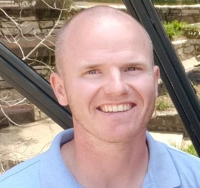
He enlisted in the United States Marine Corps in 2004 and has served over 18 years as a communications maintenance technician with three deployments to the Middle East.
He graduated with a bachelor’s degree in English and Creative Writing from Southern New Hampshire University and a bachelor’s degree in Information System Security with a concentration in Digital Forensics from American Military University.
- Top 10 Marine Corps Recruiting Commercials of All Time (2026) - June 20, 2024
- Marine Chain of Command - June 20, 2024
- Marine Rifleman’s Creed Meaning & History Guide For 2026 - June 20, 2024
