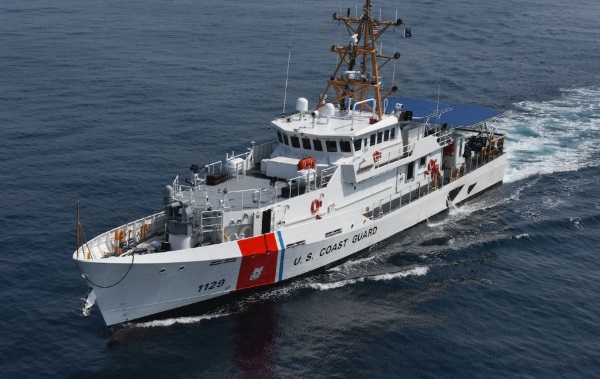
The United States Coast Guard is one of the nation’s oldest uniformed services, with roots going back to 1790.
It’s a uniquely “do-it-all” force: part military service, part federal law enforcement, and part maritime safety and regulatory agency.
Day to day, the Coast Guard protects U.S. waterways, conducts search and rescue, interdicts drugs and smuggling, enforces maritime law, and responds to environmental disasters.
All the while still being able to operate as part of the Navy during wartime.
Related Article: How To Join The Coast Guard
9 Pros of Serving in the Coast Guard
Pro: You likely won’t ever step foot in a war zone
Most military branches have a straightforward goal — to train and prepare for war missions when called upon.
However, the Coast Guard has a patchwork of tasks, responsibilities, and functions.
Since they are always working to fulfill their mission, they don’t have to train nearly as hard as other military branches since they rarely get called upon during war.
Therefore, in the Coast Guard, you are less likely to engage in war.
Pro: Housing and Food Allowances
Once you join the Coast Guard, you are entitled to government housing and food.
If government houses are not available in the area you are serving, you will receive Basic Allowance for Housing (BAH).
Related Article – Basic Allowance For Housing (BAH) Calculator
Regarding food, if you are stationed in an area that does not have government dining facilities, then you will receive Basic Allowance for Subsistence (BAS).
All allowances for food and housing are not subject to state or federal income taxes.
Pro: Free Medical and Dental Care
Alongside a handsome Coast Guard salary, this military branch also gets a bumper health package.
As long as you are on active duty, your medical, dental, and eye coverage costs are all catered for.
This means you will not pay even a cent to access medical services and dental care.
Pro: Lots of Career Choices
By serving in the Coast Guard, you will get lots of opportunities and experience such as jobs in criminal justice and criminology.
As a law enforcement entity, you have an opportunity to get valuable training and experience that can help you pursue other law enforcement careers.
Coast Guard shipmates play a crucial role in interdicting drugs, border protection, and executing marine patrol functions.
Related Article: 5 Best Coast Guard Jobs For 2019
If you want to help others and serve your country better, you can consider a career in criminal justice.
In other words, the Coast Guard offers diverse career opportunities that you can pursue and provides on-job training.
Pro: Steady Pay
Upon graduating from OCS or the Coast Guard Academy, Coast Guard officers receive a salary based on the pay grade at the time of commissioning.
The Bureau of Labor Statistics in the US provides a chart illustrating the monthly pay members of the military are entitled to receive.
The Coast Guard also offers a detailed salary chart defining salaries for each rank.
Here’s a chart showing the Coast Guard pay rates for less than 6 years of service for 2019:
| Pay Grade | 2 Yrs. or less | Over 2 | Over 3 | Over 4 | Over 6 |
|---|---|---|---|---|---|
| E-1 +4 months | $1,917.60 | $1,917.60 | $1,917.60 | $1,917.60 | $1,917.60 |
| E-2 | $2,149.20 | $2,149.20 | $2,149.20 | $2,149.20 | $2,149.20 |
| E-3 | $2,259.90 | $2.402.10 | $2,547.60 | $2,547.60 | $2,547.60 |
| E-4 | $2,503.50 | $2,631.60 | $2,774.10 | $2,914.80 | $3,039.30 |
| E-5 | $2,730.30 | $2,914.20 | $3,055.20 | $3,199.20 | $3,423.90 |
| E-6 | $2,980.50 | $3,279.90 | $3,424.80 | $3,565.50 | $3,711.90 |
| E-7 | $3,445.80 | $3,760.80 | $3,905.10 | $4,095.30 | $4,244.70 |
* Source: dfas.mil
On top of basic pay, you will receive allowances for housing and other things, as well as the retirement benefits you will get after your contract with them comes to an end.
Regarding salaries, you are paid twice a month — on the 1st and 15th.
Pro: GI Bill
Through the Post-9/11 GI Bill, the Coast Guard helps you pay for your college as well as vocational-technical training.
Related Article: Does The National Guard Pay For College?
The GI Bill provides education benefits for up to 36 months of schooling. You can also use this benefit even if you are discharged from the Coast Guard as long as it is under honorable conditions.
You can learn about this here.
Pro: 30 Days’ Vacation Every Year
You are entitled to 2.5 days of paid vacation every month, which equals 30 days every year.
This annual leave gives you an opportunity to go and rest, and also provides time off for you to go and spend with your family.
You can schedule when you want your annual leave to fall, but you will need to have it approved by your chain of command.
Pro: You’ll be Serving Your Country
You might be asking yourself, Why join the Coast Guard?
Well, one of the greatest benefits you will get is that you have a wonderful opportunity to serve your country.
You will save lives, protect US waterways and coastlines, etc.
You will learn new skills, and you can get trained in any of the Coast Guard’s 20+ job listings.
No matter the field you opt to train in, you will be prepared for anything.
The Coast Guard offers an opportunity for you to serve your country in the best way you can.
Pro: You’ll have Some Great Life Experiences
As a member of the Coast Guard, you will get an opportunity to travel to different places as part of your job.
You will not only get an opportunity to see new places, but you will do it without spending a dime.
You will access military aircraft and have your family do so as well.
Related Article – 10 Benefits Of Being A Military Wife (and 5 not-so good things)
In other words, you will enjoy a whole different life in the Coast Guard.
Well, that’s the sweet part of the cake. Let’s now see the other side of the coin.
9 Cons of Serving in the Coast Guard
Con: It’s One of the Most Selective Military Branches
The Coast Guard remains the hardest branch of the military to join because of the highest requirements they need for high school graduation.
They also reserve only a few spots making it harder to join this service.
More often, they exceed their retention and recruitment goals making them more selective when it comes to picking recruits.
Besides they have the most psychologically demanding boot camp.
Con: No Matter Your Age, Rank Still Overrides
Just like in other military branches, rank overrides everything.
Thus a younger Coast Guard can be more authoritative and get better pay than older personnel because of rank.
Experience still counts in this service, but rank overrides virtually everything.
Con: Very Little Choice of Where You’re Stationed
Recruits are offered an opportunity to choose the duty stations or regions they would like to go to, but it is the Detailer who has the final say.
If they see your choice is not feasible, then they place you where they see fit.
Yes, in the dream sheet, the recruit will be given a chance to pick the target region they would wish to go, but in the end, you should be open to wherever your detailer (assigned officer) places you.
Con: It Can Be Dangerous

Like any other branch of the military, the level of danger is dependent on the area where you are serving.
If you are a Coast Guard Helicopter Rescue Swimmer, you are more in danger especially when you are trying to save someone in windy water, and he is panicking while using you as a floater.
Related Article – Coast Guard Rescue Swimmer: Pay, School, Training, and More
Tending buoys can be dangerous as well.
However, it’s all relative, and that’s why this service is not for the fainthearted.
Con: Longer Commitment than the other branches
As a Coast Guard, you are enlisted to their contracts for 8 years.
You will serve 2 or 4 years as an active duty member and 4 years as an inactive reserve member.
However, they can offer 3, 4, or 6-year active duty contracts in some cases.
This is a longer contract period as compared to other military branches where most often they have 2-6 year contracts.
Con: The Coast Guard Has To Do More With Less
The Coast Guard is one of the military branches that receives low funding. This means they have to do more with fewer personnel.
And considering the increase in the number of maritime threats, this makes their job more dangerous.
However, they are trained to deal with the shortage of personnel, and they are known to perform their mission with fewer personnel.
Con: Basic Training Is Harder Than Most Realize
The Coast guard boot camp is one of the most psychologically demanding camps of the military.
While it may not be as demanding as that of Marines in terms of physicality, it is difficult enough for most recruits, such that it has a high failure rate as compared to other boot camps.
Therefore, you need to be psychologically prepared for their basic training.
Con: Away From Family for Potentially Long Periods
Even when you are not on active duty, you will be needed to be around your respective bases.
This means you will be an absent parent or child in your family for many days.
And when you get deployed, it becomes even more difficult for you and your family.
The emotional cycle of deployment can cause detachment and withdrawal in some families.
So, be prepared to handle the situation because it will occur.
Con: Very Bureaucratic
There are a lot of bureaucracies and micromanagement in the Coast Guard.
This service is more of a meritocracy, and you have to report to your senior even for simple things.
The rules have to be adhered to, and you cannot do anything that you desire without permission from your commander.
How Coast Guard contracts actually work (the 8-year service obligation)
Most people hear “4-year contract” and assume that’s the whole story.
In reality, federal law requires an initial military service obligation of 6–8 years for people who join an armed force, with any time not spent on active duty generally served in a reserve component.
(The statute also notes separate rulemaking authority for the Coast Guard when it is not operating as a service in the Navy.)
In plain English: many Coast Guard enlistments are 4 years active + 4 years in the Individual Ready Reserve (IRR), but exact terms depend on the job/rating, training pipeline, and what the Coast Guard is offering at the time.
Conclusion
Before you decide to join the Coast Guard, you need to assess yourself first and gauge whether or not you are ready to serve the United States in the best way you can.
You need to have a high level of commitment and will to serve your country.
While members of most other military branches defend the United States in theaters of war outside the US, Coast Guard members act as the first line of defense at home safeguarding the coastline.
Eight years of service may seem like a long time to enter into a contract, but keep in mind that for 2 to 4 years, you will be serving as a reserve for only two days a month — that equates to two weeks per year.
Of course, you will be separated from your family and also encounter dangerous moments, but it is safer and easier to be a Coast Guard than be in other military branches.
Pros And Cons Of Other Branches
Pros And Cons of Joining The Navy
Pros And Cons Of Joining The Air Force
Pros And Cons of Joining The Army
Pros And Cons Of Joining The Marines