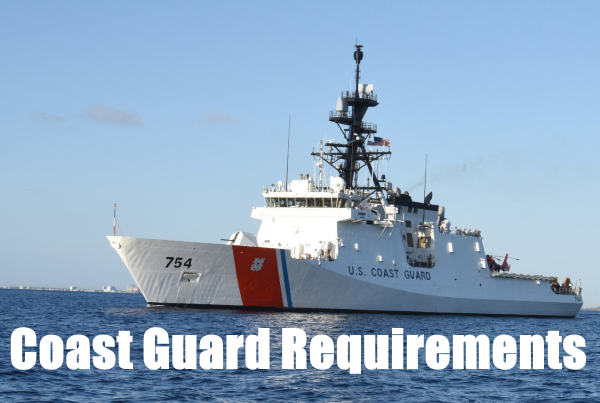
Joining the Coast Guard is a popular choice for those who want to serve close to home, protect America’s coasts, and perform a wide variety of missions from search and rescue to law enforcement.
The requirements are competitive but achievable if you prepare properly.
Knowing the exact standards for age, education, ASVAB, physical fitness, and medical qualifications helps you avoid surprises at MEPS.
This 2026 guide gives you the current, up-to-date requirements so you can determine whether you qualify and what steps to take next.
Jump To A Section
Basic Requirements
Physical Fitness Requirements
Frequently Asked Questions (FAQ)
Summary
Basic Requirements


The U.S. Coast Guard is one of eight uniformed services.
In addition to its responsibilities to the U.S. Armed Forces, the Coast Guard also provides maritime law enforcement.
Consequently, the Coast Guard has jurisdiction in both domestic and international waters.
The Coast Guard basic requirements allow the coastal defense and maritime branch to make sure you are fit for service:
- Citizen of the United States or a Resident Alien.
- Between the ages of 17-31*
- Received a high school diploma or GED equivalent.
- Possess no more than three dependents.
- Complete the Armed Services Vocational Aptitude Battery (ASVAB).
- Pass a military entrance medical exam (MEPS).
*NOTE: Coast Guard Reservists may enlist between the ages of 17-40.
The U.S. Coast Guard utilizes these basic requirements for its initial screening.
It’s important to perform well on the Armed Services Vocational Aptitude Battery (ASVAB) because the test score opens up more job possibilities.
The Coast Guard refers to military jobs as “ratings’.
Every USCG rating has a minimum ASVAB score needed to qualify for the position.
Therefore, it’s crucial to study hard for the ASVAB and give it your maximum attention.
Additionally, the United States Coast Guard has height and weight restrictions.
Lastly, the Coast Guard will perform a background check to study your personal conduct.
The military branch will look into any criminal record as well as history with alcohol or drug abuse.
Related Article: 18 Pros And Cons Of Joining The Coast Guard
Physical Fitness Requirements

There are nearly 41,000 active-duty members of the Coast Guard and an additional 7,000 Reservists.
As a result, it’s a very competitive branch to join when compared to the much larger Navy and Army.
If you would like to join the Coast Guard, you’ll need to meet (and preferably exceed) the physical fitness requirements.
The Coast Guard requirements on physical fitness are intense for a reason.
Additionally, new recruits need to have a willingness to serve on or around water because of the unique duties of the military branch.
The U.S. Coast Guard requires you to meet these minimum physical fitness requirements before you graduate boot camp:
| Event | Male Minimum | Notes |
|---|---|---|
| Push-ups (1 minute) | 29 | Cadence or standard form; must complete in 60 seconds. |
| Forearm Plank | 1:18 (1 minute 18 seconds) | Hold position; timed hold. |
| Cardio Option 1: 1.5-mile Run | 12:29 | Timed run on track or measured course. |
| Cardio Option 2: 12-minute Swim | 500 yards | Distance in 12 minutes (alternative to run). |
| Cardio Option 3: 2000-meter Row | ~9:20 (approximate goal time; distance-based) | Ergometer row as alternative. |
And these physical fitness requirements are for females:
| Event | Female Minimum | Notes |
|---|---|---|
| Push-ups (1 minute) | 15 | Cadence or standard form; must complete in 60 seconds. |
| Forearm Plank | 1:09 (1 minute 9 seconds) | Hold position; timed hold. |
| Cardio Option 1: 1.5-mile Run | 15:05 | Timed run on track or measured course. |
| Cardio Option 2: 12-minute Swim | 400 yards | Distance in 12 minutes (alternative to run). |
| Cardio Option 3: 2000-meter Row | Same as males | Ergometer row as alternative. |
The Coast Guard has demanding physical fitness requirements because of the degree of difficulty being in dangerous waters.
Consequently, Coast Guardsmen are among the most physically fit in the world.
The good news is that the Coast Guard gives you time to train physically for service.
It’s a good idea to already workout ready and become an advanced swimmer if you are not so already.
Click Here to learn more about the Coast Guard PT test standards.
Related Article: How To Join The Coast Guard
Medical Examination
Secondly, you’ll need to pass a medical screening at MEPS.
The Military Entrance Processing Station (MEPS) is one of the last junctures needed to qualify for service.
MEPS exams your medical history as well as your psychological competence.
Any medical conditions that are disqualifying require a waiver to progress to boot camp.
In order to survive basic training and become an official Guardsman, the Coast Guard recommends that recruits stop using tobacco.
Furthermore, maintaining a regular exercise routine and limiting alcohol use goes a long way in making sure you’re completely prepared.
The Coast Guard recommends a workout plan that includes cardio along with muscular fitness, strength, and flexibility training.
Finally, follow a low-fat nutrition plan to keep your body in peak shape and drink a ton of water.
Check out OMK’s 30-day workout plan to prep for basic training here.
Frequently Asked Questions (FAQ)


Here are the most commonly asked questions about Coast Guard requirements for service:
Related Article – Coast Guard Grooming Standards
Is it hard to get into the Coast Guard?
The United States Coast Guard has nearly 41,000 active-duty members.
Additionally, the USCG has over 8,500 full-time civilian employees and 7,000 Reservists.
All in all, the military branch employs a workforce of more than 87,000 people.
Therefore, there are positions available in the Coast Guard with the right dedication and discipline.
The U.S. Coast Guard is extremely physically demanding.
Consequently, you’ll need to get in excellent shape and excel swimming and wading in water.
Coast Guard basic training only lasts eight weeks yet is very challenging.
In fact, it has the highest failure to complete rate of any military branch (yes, even over the Marine Corps).
For this reason, while it’s not all that hard to meet the basic Coast Guard requirements, surviving boot camp is a whole other matter.
How long do you have to serve?
Guardsmen are required to serve eight years.
According to the U.S. Coast Guard, the most common contract consists of four years of active duty and four years in the inactive Reserve component.
In certain situations, the Coast Guard may offer a four or six-year contract.
However, while it’s not extremely common, it’s worth speaking to a recruiter if you would like to discuss different contract terms.
They may offer something a little more suitable to your needs, depending on their current recruiting targets.
What’s the pay like?
The U.S. Coast Guard pays well for your services.
Like every other US military branch, Coast Guard pay is determined by years of service and your rank within the branch.
Therefore, the more years you serve and the higher in rank – the higher the pay.
Officers earn more than enlisted members if you want to work toward that type of promotion.
Moreover, the U.S. Coast Guard has a good benefits package which includes health insurance and financial aid for continuing your education.
Where is basic training conducted?
Coast Guard basic training takes place in New Jersey.
The U.S. Coast Guard Training Center Cape May serves as the training grounds.

It’s the only training center dedicated to basic training for the U.S. Coast Guard.
Recruits are allowed to receive letters throughout boot camp, and are encouraged to reach out to friends and family while they go through the grueling training.
How long is basic training?
Coast Guard basic training (or boot camp) lasts eight weeks.
USCG boot camp is physically and mentally demanding.
It will test your strength and endurance to see if you have what it takes to survive in the Coast Guard.
The first few weeks of boot camp are especially difficult.
You can make the transition to the Coast Guard easier by exercising regularly, practicing your swimming skills, and eating healthy.
It also goes without saying that it helps to limit your alcohol intake and stop using tobacco products before you arrive to basic training.
Related Article: 5 Best Coast Guard Jobs
What People Get Wrong About Coast Guard Requirements
Many people assume the Coast Guard has the easiest entry standards because it is the smallest branch. In reality it is one of the most selective.
The Coast Guard accepts fewer applicants each year than the other services and maintains strict limits on age, ASVAB scores, and medical conditions.
Another common myth is that the physical fitness standards are much easier than the other branches.
While the minimums are slightly lower than the Marines, the Coast Guard still requires solid push-ups, sit-ups, running, and swimming ability.
Failing the initial fitness test at boot camp can lead to recycling or early separation.
Some applicants believe that having a GED instead of a diploma is no problem.
The Coast Guard is one of the strictest branches on education credentials and limits the number of Tier 2 (GED) applicants it accepts each year.
Many potential recruits think that as long as they are under the maximum age when they talk to a recruiter they are fine.
The age limit is calculated on your ship date, not the day you sign the contract. Waiting too long to ship can push you over the limit.
A frequent mistake is assuming that any past medical issue can be waived. The Coast Guard is particularly strict on certain conditions such as asthma, ADHD, and certain mental health diagnoses.
Waivers are possible but not guaranteed and require strong documentation.
Finally some people believe the process is fast once you qualify.
From the day you speak with a recruiter to the day you ship can easily take 6 to 12 months due to job availability, MEPS scheduling, and background checks.
Understanding these realities helps you prepare accurately and avoid common pitfalls that cause many qualified applicants to get turned away in 2026.
Conclusion
Coast Guard requirements are necessary to make sure that new recruits are ready for service.
The coastal defense and maritime law enforcement branch has strict physical fitness standards.
It’s important to get in great shape and become an advanced swimmer before boot camp.
The Coast Guard also requires new recruits to complete the ASVAB test to determine a USCG rating.
Additionally, recruits need to pass the Military Entrance Processing Station (MEPS) medical exam before they can begin basic training.
A local Coast Guard recruiting office has more information on the requirements and expectations of the military branch.