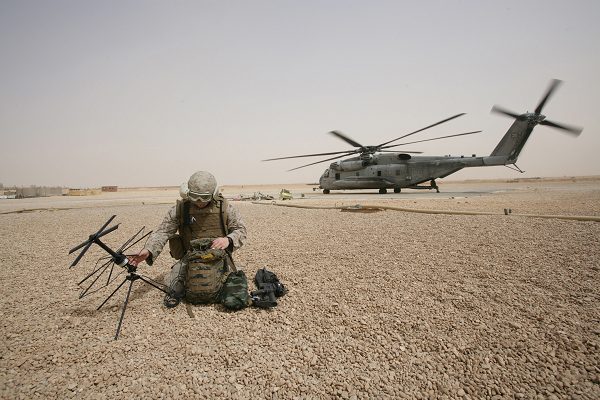
Marine Transmission System Operator (MOS 0621) is the Marine Corps’ primary communications specialist.
These Marines establish and maintain radio networks, transmit critical information, and ensure units stay connected in every environment from the battlefield to humanitarian missions.
It is a technical, high-responsibility role that demands attention to detail, quick problem-solving, and the ability to perform under pressure.
This 2026 guide explains exactly what the MOS involves, the full training pipeline, daily responsibilities, pay, deployments, and the real pros and cons so you can decide if it is the right fit.
Related Article – 4 Steps For Visiting A Marine Corps Recruiter Near You
Requirements and Qualifications for MOS 0621

There are a few requirements to consider before becoming a Transmission System Operator.
In general, the basic requirements are the same for all Marines, including high school diplomas, citizenship, and physical requirements.
Marines who wish to be Transmission System Operators must complete the Basic Communications Course and the Transmissions System Operator Course.
Also, Transmission System Operators must pass a secret security clearance.
All members of the military take the ASVAB test to determine aptitude for specific vocations and to be a Transmission System Operator, your score for the Electronics section (EL) should be 105 or better.
Other requirements include the capability to communicate effectively and precisely, as well as the ability to solve problems quickly.
Transmission System Operators must also have normal color vision.
Also, preferring detail-orientated work and multi-tasking is essential.
MOS 0621 Training and Career Path
Training for MOS 0621 occurs in 29 Palms, California, after boot camp and combat training.
The training is at the Marine Corps Communication-Electronics School (MCCES), which is where the Marines train most of the communications specialties.
However, because class sizes are small, there is often a waiting period onsite to begin training, which lengthens the amount of time a Marine must wait before starting work in their specialty.
This waiting time is referred to as Marines Awaiting Training (MAT).
During this training, Marines learn tactical communications, electronics maintenance, air control, and anti-warfare operations.
The Tactical Communications Training School (TCTS) is where Transmission System Operators learn their skills.
As you move up in rank and gain experience, your next level of training is as a Transmission Supervisor.
Related Article – Marine Corps MOS List and ASVAB Scores: Details Of All 123 Jobs
Working Conditions for a MOS 0621
A Transmission System Operator can find themselves working with a variety of units.
You might be attached to an engineer, headquarters, or communication unit.
Some in this MOS find themselves attached to an artillery or infantry unit, however.
A Transmission System Operator is not an infantryman, but when attached to these units, they may find themselves in combat handling the radios.
Pay and Benefits
As a Marine, you will enjoy competitive pay and benefits.
Basic pay is calculated by rank and the amount of time in service.
| Insignia | Pay Grade | Rank | Abbreviation | 2026 Minimum Monthly Pay |
|---|---|---|---|---|
| E-1 +4 months | Private | PVT | $2,226 | |
| E-1 (after 4 months) | Private | PVT | $2,407 | |
 | E-2 | Private First Class | PFC | $2,698 |
 | E-3 | Lance Corporal | LCpl | $2,837 |
 | E-4 | Corporal | Cpl | $3,142 |
 | E-5 | Sergeant | Sgt | $3,343 |
 | E-6 | Staff Sergeant | SSgt | $3,401 |
 | E-7 | Gunnery Sergeant | GySgt | $3,932 |
 | E-8 | Master Sergeant | MSgt | $5,657 |
 | E-8 | First Sergeant | 1stSgt | $5,657 |
 | E-9 | Master Gunnery Sergeant | MGySgt | $6,910 |
 | E-9 | Sergeant Major | SgtMaj | $6,910 |
 | E-9 | Sergeant Major Of The Marine Corps | SgtMaj | $6,910 |
Also, the Marines have a housing allowance, healthcare coverage, subsidized food, retirement, as well as other benefits that add up to significant savings and add to your overall compensation package.
MOS 0621 Job Details
The duties of the MOS 0621 include maintaining and operating radios with different frequencies and creating contact with different stations or units.
Also, a Transmission System Operator will handle changing the frequency of radios and changing the codes that ensure information is transmitted safely.
Furthermore, it is vital Transmission System Operators maintain the equipment as well as the software.

Job Reviews
Reviews from those who currently serve in the Marines in this capacity note the training and work are often challenging.
Also, some service members discuss difficulties with deployments and incompatibility with some in leadership positions.
However, most discuss the positive feelings of being able to travel and the consistency the Marine offers.


Related Article: 13 Pros And Cons Of Joining The Marines
Civilian Career Opportunities
Because of the security clearance necessary for this MOS, many Marines consider federal employment when leaving the military.
There are a few federal jobs that have a similar education and experience as the MOS 0621.
These include:
- Intelligence
- Cryptography
- Information Technology Management
- Radio Officer/Assistance Radio Officer
Those in federal jobs are well-compensated.
For instance, a Transmission System Operator might consider applying for a job as a Lead Intelligence Operations Specialist.
This position averages $126,495 per year.
Another opportunity for a Transmission System Operator is a federal position as an IT Specialist.
IT Specialists can expect a salary range from $59,681 up to $185,829, depending on experience and responsibilities.
There are civilian opportunities, as well.
First-Line Supervisors of Mechanics, Installers, and Repairers
In this position, you can expect to supervise the activities of repairers, installers, and mechanics.
There is an expectation that this industry will grow by 5% over the next few years.
Ideally, candidates have up to five years of experience in this field.
The typical salary for this position averages $76,020 a year, according to the U.S. Bureau of Labor Statistics.
Network and Computer Systems Administrators
A position as a Network and Computer Systems Administrator include handling the local area network (LAN) and the wide-area network (WAN), as well as the internet systems.
New job opportunities are expected to grow in this field, and you can expect a salary averaging $97,160.
Related Article – Army Radio Operator (MOS 25C): Career Details
What People Get Wrong About Marine Transmission System Operator (MOS 0621)
Many recruits assume 0621 is basically a radio operator job where you just sit in a vehicle and talk on the radio all day.
In reality it is a demanding technical MOS that involves setting up complex communication networks, troubleshooting equipment failures in the field, maintaining antennas and generators, and operating under harsh conditions with very little margin for error.
Communication breakdowns can directly impact mission success and troop safety.
Another widespread misconception is that the job is low stress and rarely deploys.
The opposite is true.
Transmission System Operators frequently deploy with infantry, artillery, and command units and often operate in austere environments where they must keep communications alive while under threat.
Some Marines believe the training is short and easy compared to combat arms.
The pipeline after boot camp includes the Basic Communications Course and the Transmissions System Operator Course at 29 Palms, with significant technical and field components that challenge even strong candidates.
Many assume that once you finish training you will spend most of your time in an air-conditioned comms shop.
Junior 0621s often spend more time on vehicle maintenance, field setup, convoy operations, and supporting live exercises than working in a comfortable office.
A frequent error is underestimating the accountability.
These Marines handle sensitive encryption equipment and frequency management.
Losing or compromising communications gear can have serious consequences.
Finally many believe the MOS has limited career progression or civilian value.
In reality experienced 0621s move into senior supervisory roles, instructor positions, or transition into high-paying civilian jobs in telecommunications, IT, and government communications with their security clearance and technical experience.
Understanding these realities helps Marines enter the 0621 MOS with accurate expectations and positions them for long-term success in 2026.
Conclusion
The career as a Transmission System Operator in the Marines has evolved over the decades.
However, what has not changed is the need to communicate effectively and safely.
Transmission System Operators play an essential part in the Marine Corps, and they do their work in a variety of units, including infantry.
The training for MOS 0621 is in California, and Marines attend this advanced training after completing boot camp and combat training.
After training, Marine Transmission System Operators report to their assigned unit to perform their duties.
These duties include maintaining and operating radios and ensuring the information is transmitted securely and quickly.
The Marine Corps offers a competitive pay package between base pay and allowances for housing and other benefits.
As a civilian, former Marines might look into federal jobs due to the possession of secret security clearance.
However, there are jobs in the private sector, as well.
References:
https://www.cool.navy.mil/usmc/enlisted/0621.htm
https://www.careeronestop.org/