
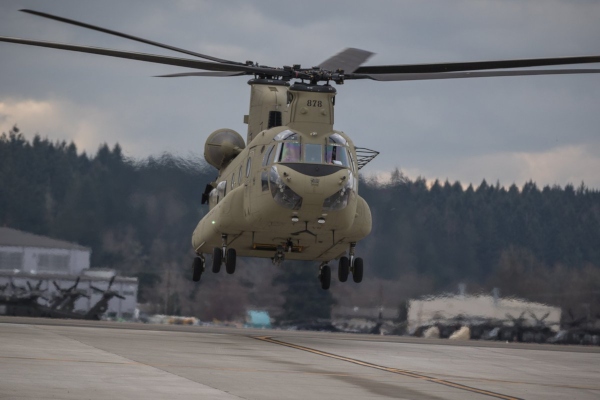
The High School to Flight School program is an Army aviation pathway that allows qualified high school graduates to apply for pilot training without first earning a college degree.
This program is specific to the U.S. Army and differs from aviation accession programs in other military branches.
Applicants who meet eligibility standards may compete for selection into Army aviation training through the warrant officer pathway.
Understanding how the program works, its requirements, and its training process helps clarify what is involved in pursuing this option.
Jump To A Section
What is The High School To Flight School Program?
What Happens If You Get Accepted?
What Happens At Army Flight School?
What is the High School to Flight School program?

The coveted role of becoming a pilot is generally reserved for candidates with at least a bachelor’s degree. The lone exception is the United States Army.
Sometimes referred to as “Street to Seat,” the High School to Flight School program provides recent high school graduates the opportunity to apply as warrant officers, where they can then progress to Army Aviation School.
Related Article – American Military University (AMU) Reputation: Worth It? (2023 Review)
The unique opportunity has not always been present in the U.S. Military and previously opens up the doors to a number of new applicants.
Though it is still considered a very competitive school to gain admittance, just knowing that students do not need to spend at least another two to four years in college before even getting considered for Army helicopter or fixed-wing training is a relief.
What are the High School To Flight School requirements?

There are still several different requirements for the High School to Flight School program, even though members of the Army Aviation School are no longer required to have to obtain at least a bachelor’s degree before admittance.
- You must be at least 18 years of age when you enlist in the Army.
- You need to be a citizen of the United States. If you are not a citizen, you can apply as soon as you enlist with certain exemptions.
- You must meet the height and weight standards of the U.S. Army.
Related Article: Army Height & Weight Standards
If you meet the basic requirements for consideration, you should do everything possible to stand out from a long list of prospective candidates.
It is recommended that you write an essay and gather as many letters of recommendation as possible.
Prospective flight school students must do a series of aptitude tests.
Candidates must also take the Armed Forces Vocational Aptitude Battery (ASVAB) tests and receive a general technical score of 110 or higher.
Additionally, you’ll be required to take the Selection Instrument for Flight Training (SIFT) test.
This test will measure your skills and characteristics that have been identified by the Army as being “crucial” to being successful as a helicopter pilot.
In order to be accepted into the High School To Flight School program, you’ll need to get a minimum of 40.
However, if you want to better your chances, it’s suggested that you score much higher.
Selection rates for the High School to Flight School program are low and vary based on applicant pool and Army requirements.
Only a small percentage of applicants are selected for the program.
You can learn how to increase the chances you’ll be selected towards the bottom of this article.
What happens if you get accepted?

Though it is exciting to meet the general requirements of the Army High School to Flight School program and gain acceptance – there are still other steps you need to take in order to remain active for consideration.
The ranking of warrant officer is necessary in order to attend Army Aviation School, so it does take some time to get the necessary credentials.
Furthermore, there are two levels of physicals you must take in order to prove physical aptitude:
- Military Entrance Processing Station (MEPS)
- Flight Class I Physical
The latter of which is performed at Fort Novosel, AL, by approved flight surgeons. One of the biggest factors for pilots is eye exams.
Related Article: Army MOS List
Your vision cannot be worse than 20/50 in either eye and must be correctable to 20/20. In order to remain on flight status after training, pilots must maintain a vision that does not deteriorate beyond 20/400.
Unfortunately, the U.S. Army Flight School also does not accept candidates that are color blind or have issues with depth perception.
The U.S. Army military board selects candidates for flight school before they turn 33 unless a waiver is granted to individuals aged 33 or 34.
Once all of the above criteria have been met, you will attend basic combat training for 10 weeks as well as another 5 weeks of warrant officer candidate school.
As previously mentioned, it is not possible to attend Army Aviation School without being a rank of at least warrant officer.
A warrant officer is considered a technical expert that specializes in a particular battlefield skill, in this case flying helicopters. Warrant officers are different from commissioned officers in that they continue to work in their specialty, instead of accenting the ranks of chain of command.
What happens at Army flight school?

After all your hard work getting accepted and then passing all the testing and physical requirements, it is time to finally pursue your dream of becoming an Army pilot.
The Army Aviation Academy is located at Fort Novosel in Alabama and conducts flight training for Army aviators.
The program will launch with instruction learned in the classroom and progress to actual flight training.
The flight school covers the basics of aviation such as basic flight physics, flight systems, navigation, reading maps, and emergency procedures.
After the early stages, training advances to what is called Warrior Hall. Here, new pilots get the opportunity to learn piloting skills while operating simulators.
The U.S. Army currently requires over seven hours of training on the simulators before they’ll let students progress to actual maneuvers.
Training standards and required flight hours vary by aircraft type and training progression.
Regardless of the type of aircraft used, one of the most challenging aspects of training is reportedly being assigned night vision goggles that limit your vision in the air to only 40 degrees.
The goggles, which are mounted on the front of the flight helmet, are designed to test the advanced flying and survival skills of pilots.
All in all, expect at least a year to 18 months of training at the Army Aviation School in Fort Novosel in order to graduate from the program.
Related Article – Air Force Helicopter Pilot: Requirements, Training, & More
What happens after Army Flight school?

Congratulations! Students that successfully navigate through the coursework in the classroom, as well as flight simulator and real-life scenarios, are finally acknowledged as official Army pilots.
Now that every graduating member has become an expert in one type of aircraft they will have the opportunity to be assigned to over 25 different different regiments of the U.S. Army, including the Army Reserves and Air National Guard too.
Pilots that wish to continue their accession into the ranking of some of the best pilots in the world try out for the Army’s Special Operations Aviation Regiment. The unit is known as the 160th SOAR.
Here, pilots are presented with rare opportunities to handle special types of helicopters such as the MH-47G Chinook, MH-60M Black Hawk, and A/MH-6M.
Related Article: U.S. Army Age Limits
Operational assignments vary based on unit mission and location. Army helicopter pilots are deployed regularly (including Army Reserve and Air National Guard members) to deal with air strikes or to assist troops on the ground.
Army pilots have served in large numbers including the most recent conflicts in Iraq and Afghanistan. Some pilots may remain overseas for 9 to 12 months. Pilots are traditionally stationed with the infantry unit they support.
Army aviation crews exist basically anywhere in the vicinity of ground troops, artillery, or tanks. As a result, you can see the world as a pilot – not only from the air but also on land.
Whether you want to get stationed overseas or hopefully remain close by in the United States, the possibilities are nearly endless.
Some of the most popular stations for Army pilots include:
- Wheeler Army Airfield – Hawaii
- Fort Bliss – Texas
- Fort Riley – Kansas
- Joint Base Lewis-McChord – Washington
- Fort Drum – New York
- Fort Liberty – North Carolina
- Hunter Army Airfield – Georgia
- Fort Campbell – Kentucky
- Fort Cavazos – Texas
- For Carson – Colorado
- Camp Humphreys – South Korea
What are my chances (and how do I increase them)?

Though the U.S. Army has loosened its restrictions on applying for its aviation school through the High School to Flight School program, it is not to suggest that it is far easier to become an Army pilot.
Helping students that do not have the money or time to spend four years in college before getting considered is helpful, yet the Army still has tight guidelines for getting qualified.
As a result, selection is limited.
The Army closely scrutinizes its large pool of candidates and only selects a certain few to advance to Army Aviation School in Fort Novosel.
Selection rates vary and remain competitive.
So the million-dollar question on most of your minds is probably the following:
How do I increase my chances of getting into the High School To Flight School program?
In order to be successfully selected, you should:
- Perform well on aptitude tests like the ASVAB
- Have a high GPA (3.0 or above)
- Take various SIFT practice tests
- Get good at writing essays
- Get letters of recommendation from various high-profile sources
- Get in great physical shape
- Visit an aviation medical examiner in your area and get a flight physical
That last part is actually more important than most realize.
If you don’t medically qualify for Army aviation, then it won’t matter how well you do on any test, how many sports you play, or how smart you are.
You will simply not get in if you can’t pass an army flight physical.
Having a high GPA will give the recruiting board extra incentive to consider you as a candidate.
As we mentioned earlier, one of the most important tests you’ll have to take is the SIFT test.
The better you do on that test, the better your chances will be of getting into the High School to Flight School program.
What People Get Wrong About High School to Flight School
A common misconception is that High School to Flight School guarantees acceptance into Army flight training.
In reality, the program is highly competitive, and meeting the minimum requirements does not ensure selection.
Some people believe that applicants bypass military training entirely.
Participants are still required to complete Basic Combat Training and Warrant Officer Candidate School before attending flight training.
Another misunderstanding is that college education is no longer relevant.
While a degree is not required for entry, academic performance and aptitude testing remain important evaluation factors.
There is also confusion about aircraft choice.
Applicants do not select their aircraft independently, as assignments are based on Army needs and training outcomes.
Finally, some assume that acceptance into the program shortens the overall training timeline.
In practice, aviation training through this pathway still requires an extended training period before qualification as an Army pilot.
Conclusion
As you can see, you can go from street to seat and become an Army pilot. It is possible even for recent graduates thanks to the High School to Flight School program.
In order to learn more information about Flight Warrant Officers, please visit the official site at Army.com.
References
https://psychometrictests.com/faq/faqmech-afas
https://www.army.mil/article/31913/high_school_to_flight_school

Great read. I’m currently a Warrant Officer in Flight Training here at Fort Rucker. I was picked up through the “Street to Seat” program. The one thing I wanted to mention is that this is not a new program. The Army has been accepting applicants straight from high school since the 80’s. Even back during Vietnam pilots were sometimes as young as 19. If I recall correctly, they were only required to be 20.5 years old by the time they finish the training. Thank you for spreading knowledge on the program!
Thanks for that Logan, and good luck in your training!
Rob V.
OperationMilitaryKids.org