
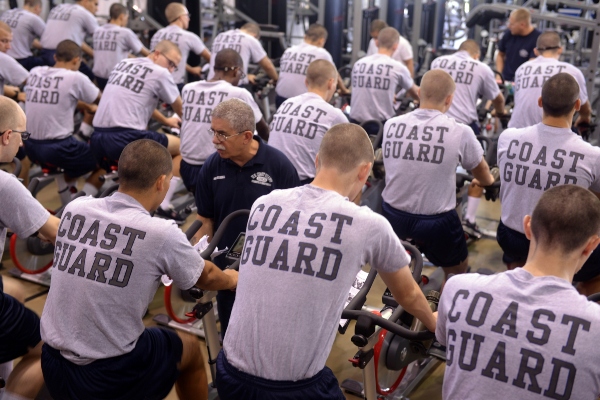
Prospective and current Coast Guard members need to understand the physical fitness requirements that ensure readiness for demanding missions.
The Coast Guard introduced the Physical Readiness Program PRP in 2026 mandating regular training and a new official Physical Fitness Test PFT for all able-bodied service members.
Starting July 1, 2026 the PFT replaces prior assessments and becomes part of official records potentially affecting promotions advancements and assignments.
The test uses Boat Crew Physical Fitness Standards featuring push-ups timed forearm plank and a cardio event with choices of 1.5-mile run 12-minute swim or 2000-meter row.
Standards vary by age and gender with no sit-ups as planks replaced them in recent updates.
Enlistment eligibility includes minimum performance in push-ups plank and run while the full PFT applies service-wide twice yearly.
Preparation involves consistent training focusing on strength endurance and cardio to meet or exceed benchmarks.
This guide details the current 2026 standards components variations and tips for success.
Related Article – How To Lose Weight For The Military: Your 30-Day Plan
Coast Guard Male PT Test Standards

The Coast Guard uses physical fitness test standards to determine if you are physically able to perform the necessary duties of the military branch.
It’s designed to test strength and stamina, as well as address any significant health risks.
The physical fitness test will challenge you in six different activities.
Push-ups and timed forearm plank are straightforward.
Males have to complete the minimum number of reps within 60 seconds. The run is timed at 1.5 miles.
The cardio event offers flexible options: a timed 1.5-mile run, 12-minute swim (distance-based), or 2000-meter row.
Additional water proficiency elements like treading and platform jump/swim remain for certain roles but are not part of the core PFT.
You just need to be able to complete the activity.
Lastly, the Sit & Reach activity is a flexibility test that requires you to sit with your feet and legs together as you reach toward your feet.
Then, a measurement is taken by determining the length from your knees to your feet.
In order to pass the test, you must be able to reach the posted distance for males.
Male Coast Guard PT Test Standards (Table)
| Event | Male Minimum | Notes |
|---|---|---|
| Push-ups (1 minute) | 29 | Cadence or standard form; must complete in 60 seconds. |
| Forearm Plank | 1:18 (1 minute 18 seconds) | Hold position; timed hold. |
| Cardio Option 1: 1.5-mile Run | 12:29 | Timed run on track or measured course. |
| Cardio Option 2: 12-minute Swim | 500 yards | Distance in 12 minutes (alternative to run). |
| Cardio Option 3: 2000-meter Row | ~9:20 (approximate goal time; distance-based) | Ergometer row as alternative. |
Related Article – Coast Guard Jobs List: A List Of All Ratings In The Coast Guard
Coast Guard Female PT Test Standards


Females have different expectations compared to men when it comes to physical fitness test requirements in the Coast Guard.
Once again, the tests are used to gauge your strength and stamina.
The Coast Guard physical fitness test for females consists of the same six activities.
The expectations are the same for females as males for the five-minute treading water as well as the platform jump and swim.
However, the Coast Guard PFT standards vary by age and gender for push-ups, timed plank, cardio event, and other components.
Female Coast Guard PFT Standards (Table)
| Event | Female Minimum | Notes |
|---|---|---|
| Push-ups (1 minute) | 15 | Cadence or standard form; must complete in 60 seconds. |
| Forearm Plank | 1:09 (1 minute 9 seconds) | Hold position; timed hold. |
| Cardio Option 1: 1.5-mile Run | 15:05 | Timed run on track or measured course. |
| Cardio Option 2: 12-minute Swim | 400 yards | Distance in 12 minutes (alternative to run). |
| Cardio Option 3: 2000-meter Row | Same as males | Ergometer row as alternative. |
Related Article: Coast Guard Height And Weight Requirements
What People Get Wrong About Coast Guard PT Test Standards
Many believe the Coast Guard has no mandatory fitness test like other branches overlooking the new service-wide PFT implemented in July 2026.
In reality the PRP now requires bi-annual official PFTs for active duty and Selected Reserve members with scores recorded and potentially impacting career progression.
People often assume the test still includes sit-ups not realizing planks replaced them in updates aligning with modern fitness science and Navy changes.
Another misconception is that standards are uniform across all members when they vary significantly by age group and gender to account for physiological differences.
Families sometimes think the cardio portion is only a 1.5-mile run ignoring flexible options like a 12-minute swim or 2000-meter row for those with joint issues or preferences.
Others believe enlistment fitness requirements are the same as the full PFT when entry-level expectations focus on basic push-ups plank and run times while the PFT is more comprehensive for serving members.
Some view the PFA phase as punitive not understanding the 2025 PFAs were informational and non-punitive to gather data and prepare for accountable testing in 2026.
People frequently overlook body composition standards assuming only performance events matter when the PRP includes BC compliance alongside PFT scores.
Another common error is thinking preparation is unnecessary since prior boot camp tests sufficed when the new program mandates daily physical training at least four days weekly for readiness.
Clearing these misunderstandings helps recruits and members train effectively meet evolving standards and maintain peak performance for Coast Guard duties in 2026.
FAQ – Coast Guard PT Test Standards
Note that enlistment eligibility requires minimum performance in push-ups (29 males/15 females), plank (1:18 males/1:09 females), and 1.5-mile run (12:29 males/15:05 females), while the full service-wide PFT applies to all members after entry.
Let’s examine some of the most commonly asked questions about Coast Guard PFT standards:

How do I prepare for the Coast Guard physical fitness test (PFT)?
The Coast Guard recommends that you begin training for PFT as soon as possible.
It’s important to also enroll in swimming and/or diving lessons if you are not fully comfortable in the water.
New recruits that arrive at Cape May in New Jersey for Coast Guard Basic Training (CGBT) are expected to be ready to perform the six different activities of the PFT standards.
As a result, it’s important to train in advance with proper workout gear and footwear.
The Coast Guard also recommends that you stop using tobacco products and also use alcohol in moderation (of course, assuming you are over the legal age of 21).
You can also improve physical fitness not only by exercising regularly but also by maintaining a strict, low-fat nutrition plan.
Your workout routine should consist of cardio, weight training, flexibility, and swimming activities.
Is the Coast Guard Physical Fitness Test hard?
The first few weeks of boot camp in the Coast Guard are demanding.
Those that arrive out of shape or with bad habits like smoking cigarettes are at an even further disadvantage.
As a result, you can vastly improve your odds of success by training in advance.
The Coast Guard PFT test is challenging yet not impossible.
Push-ups and timed forearm plank can be mastered by male and female recruits through consistent practice.
The same thing applies to the long-distance run and sit and reach exercise.
Meanwhile, the Coast Guard will also assess your skills in the water.
Consequently, make sure you are a good to advanced swimmer that is also comfortable treading in the water for at least five minutes as well as diving.
Related Article: Coast Guard Grooming Standards
What is the Coast Guard PFA standards?
The Coast Guard Physical Fitness Assessment (PFA) is conducted as a prerequisite for certain Coast Guard jobs or training.
It’s also used as a remedial program for service members placed on probation.
The PFA assessment will test three primary factors: muscular strength, aerobic capacity, and endurance.
Coast Guard PFA standards are different from PFT standards because they are determined based on gender AND age group, unlike PFT standards.
How do Coast Guard PFT standards compare to Navy PRT standards?
The U.S. Coast Guard can get transferred to the control of the U.S. Navy at any point under the direction of the president.
As a result, you would expect physical fitness requirements to be similar.
There is certainly a little similarity with the boot camp assessment including the testing of push-ups and 1.5-mile run.
However, the Navy tests for curl-ups, compared to sit-ups with the Coast Guard.
Conclusion
The U.S. Coast Guard has simple to understand and straightforward physical fitness requirements in order to continue training after boot camp.
It’s your responsibility to arrive physically fit and ready to complete the fitness challenge.
The Coast Guard emphasizing swimming, diving, and treading water compared to other branches of the military and their own PFT standards.
Consequently, it’s important to make sure you can swim and dive well, in addition to being strong and capable of running 1.5 miles.
Check out the physical fitness testing requirements for the other military branches below:
Resources:
- https://www.gocoastguard.com/family-and-friends/the-helmsman/physical-fitness
- https://www.military.com/military-fitness/coast-guard-fitness-requirements/physical-fitness-assessment
- https://www.gocoastguard.com/faq/what-are-the-minimum-physical-fitness-requirements
- https://www.dcms.uscg.mil/Portals/10/CG-1/cg111/docs/HPM/Fit-Ass-Prot-Proc.pdf?ver=2017-04-04-153003-217
