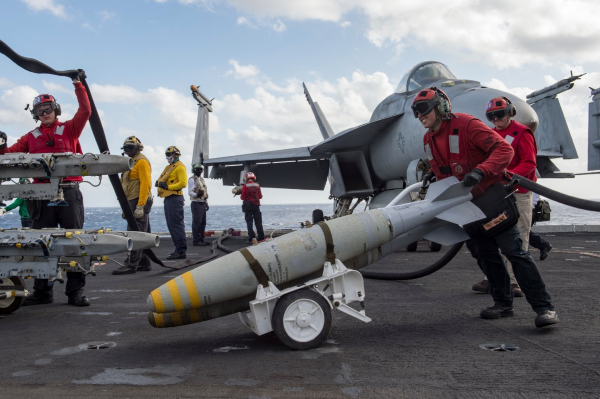
Aspiring Sailors regularly inquire about the Aviation Ordnanceman AO rating a dynamic role essential for aircraft weapons handling.
AO Sailors assemble inspect load and maintain aviation ordnance like bombs missiles torpedoes and ammunition on carriers and shore bases.
This enlisted position demands mechanical aptitude safety focus and teamwork in fast-paced high-stakes environments.
Requirements include a qualifying ASVAB score of AR plus AS plus MK plus AO equals 185 or VE plus AR plus MK plus MC equals 210 along with normal color vision and secret clearance eligibility.
Training starts with boot camp followed by a nine-week A-school at the Naval Aviation Technical Training Center in Pensacola Florida.
AO ratings provide opportunities for flight decks deployments special pays and advancement in ordnance expertise.
Benefits include competitive pay education assistance travel and pathways to civilian aviation or defense careers.
This guide details the current 2026 duties qualifications training pay and more for the Navy Aviation Ordnanceman role.
Related Article – Navy Jobs List: A List Of All 71 Ratings In The Navy
Jump To A Section
Requirements and Qualifications
To become an Aviation Ordnanceman in today’s Navy, there are specific requirements and qualifications to meet:
- Must be a member of the US Navy.
- Must be a US Citizen.
- Must be between the ages of 18 and 39.
- Must have no record of adversely adjudicated drug abuse offenses.
- Must have normal hearing.
- Must have normal eyesight (20/20 correctable).
- Must have normal color perception.
- A Department of Defense (DoD) security clearance is required. Clearance must be DONCAF (Department of the Navy Central Adjudication Facility) adjudicated.
- Must have an Armed Forces Vocational Aptitude Battery (ASVAB) score of VE (Verbal Expression) + AR (Arithmetic Reasoning) + MK (Math Knowledge) + AS (Auto Shop) = 185 or MK (Math Knowledge) + AS (Auto Shop) + AO (Assembly Objects) =140
Related Article: Navy Height And Weight Standards
Training and Career Path
Prior to becoming an Aviation Ordanceman in the Navy, you must first become a Sailor. Recruits accomplish this via successful completion of Navy Recruit Training, commonly referred to as Boot Camp.
All sailors attend Boot Camp at the Recruit Training Command, Great Lakes (RTC Great Lakes).


Located at Naval Station Great Lakes in North Chicago, Illinois in Lake County.
RTC Great Lakes is commonly referred to as “The Quarterdeck of the Navy.”
Boot Camp is eight weeks long.
During these eight weeks, the Navy will teach you the basic skills required of all US Sailors.
Related Article – Is Navy Boot Camp Hard?
Navy Aviation Ordnance Class “A” School
After Boot Camp, future AOs attend Navy Aviation Ordnanceman (AO) Class “A” School at the Naval Air Technical Training Center (NATTC) in Pensacola, Florida.
Aviation Ordnanceman Navy A School is nine weeks long and is comprised of group instruction, classroom, and shop.
In “A” school, AOs study aviation basic theory and basic skills required for rating and electronics troubleshooting.

After completion of their core “A” school, AOs will also attend either a three-week airwing strand course or a two-week ship’s company strand course depending on the type of duty station they are initially assigned (ship duty or shore duty).
The AO rating requires a 60 month (five year) service obligation.
They should also pursue warfare qualifications depending on their duty station, such as:
- EAWS (Enlisted Aviation Warfare Specialist)
- ESWS (Enlisted Surface Warfare Specialist)
The Navy provides online training to qualified AOs through their Credentialing Opportunities On-Line website, referred to as Navy COOL.
Additional training, such as Aviation Ordnanceman Class “C” schools are available to AOs as their Navy career progresses.
How Much Are Navy Aviation Ordnanceman Paid?
Like the other Armed Services, the Navy bases a sailor’s pay on their rank and length of service.
| Insignia | Pay Grade | Rank | Abbreviation | 2026 Minimum Monthly Pay (<2 Years) |
|---|---|---|---|---|
| N/A | E-1 | Seaman Recruit | SR | $2,407.20 (after 4 months; $2,225.70 for first 4 months) |
 | E-2 | Seaman Apprentice | SA | $2,697.90 |
 | E-3 | Seaman | SN | $2,836.80 |
 | E-4 | Petty Officer Third Class | PO3 | $3,142.20 |
 | E-5 | Petty Officer Second Class | PO2 | $3,342.90 |
 | E-6 | Petty Officer First Class | PO1 | $3,401.10 |
 | E-7 | Chief Petty Officer | CPO | $3,932.10 |
 | E-8 | Senior Chief Petty Officer | SCPO | $5,656.50 (starts at over 8 years) |
 | E-9 | Master Chief Petty Officer | MCPO | $6,910.20 (starts at over 10 years) |
 | E-9 | Fleet/Command Master Chief Petty Officer | FMCPO/CMCP | $6,910.20 (starts at over 10 years) |
 | E-9 | Master Chief Petty Officer of the Navy | MCPON | $6,910.20 (starts at over 10 years) |
AOs may be entitled to other forms of compensation including base allowance for housing (BAH), base allowance for subsistence (BAS), and billet pay (sea pay, flight pay, hazardous duty pay, etc.) if eligible.
Related Article: Navy Ranks And Pay
What’s Life Like as a Navy Aviation Ordnanceman?
The Navy’s Rating Information Card describes the AO rate as:
“Aviation Ordnanceman are aircraft armament (weapons) specialists in charge of storing, servicing, inspecting and handling of all types of weapons and ammunition carried on Navy aircraft.”
Specifically, what an AO in the Navy does is:
- Service aircraft guns and accessories.
- Assemble, stow, and load aviation ammunition including rockets, torpedoes, missiles, and aerial mines.
- Maintain, repair, and inspect aircraft electrical and mechanical armament/ordnance systems.
- Supervise the operation of stowage facilities, aviation ordnance ships, and armories.
- Service missile, bomb, and rocket releasing and launching devices.
- Load supplemental munitions.
- Assemble, maintain, and test air-launched guided missiles.

AOs work ashore in hangars, on flight lines at air stations, in shops under various environmental conditions, or at sea on flight decks.
The work is often physical in nature and requires little supervision.
AOs often work closely with their shipmates.
The ability to keep records is key as is the ability to perform repetitive tasks and detailed work.
Aviation Ordnanceman 2nd Class (AO2) Adoni Hughes serves aboard the aircraft carrier USS George Washington (CVN 73) along with over 5,000 shipmates (3,200 in ship’s crew and 2,500 in the air wing).
AO2 Hughes loves and thrives at his job.
He was recently meritoriously promoted to petty officer second class.
“It was a stepping stone for my career. I didn’t expect it and it came out of nowhere. It shows that people saw my hard work.”
“Serving in the Navy gives me more value,” adds AO2 Hughes. “I am doing something more with my time.”
AO2 Hughes shipmate, AOAN Dijon Bryant also enjoys his work aboard the 100,000-ton aircraft carrier.
“Serving in the Navy means I am giving back in some sort of way to my community and anyone else out there that may need help.
I am doing something to better the country.”
AO2 LeGrande on shore duty with Strike Fighter Squadron (VFA) 106, operating out of Naval Air Station (NAS) Oceana, Virginia, is thriving in his career with the Navy.
“I’m responsible for the safety of the evolution. You need to be a petty officer second class or above.
I also have three Navy and Marine Corps Achievement Medals.
One was for an inspection that we scored really well. It all means something.”
On the flight deck only AOs, crash and salvage crews, and explosive ordnance disposal (EOD) wear red shirts.
Related Article – Dishonorable Discharge: Reasons, Consequences, And More
Typical Rotation
Sailors in specific jobs (or rates as the Navy refers to them) must adhere to a Sea/Shore rotation based on their rate.
The AO rate is a sea-intensive rate.
During a twenty-year career in the Navy, an AO will spend about 60 percent of their career at sea, and 40 percent assigned to shore stations.
Throughout an AOs career, manning conditions at sea may require the need to request sea tour extension or shore tour curtailments to ensure adequately manned sea billets.
Specifically, the Sea/Shore rotation for an AO is:
| Tour | Sea Tour | Shore Tour |
|---|---|---|
| First Tour | 53 Months (4.5 Years) | 36 Months (3 Years) |
| Second Tour | 60 Months (5 Years) | 36 Months (3 Years) |
| Third Tour | 48 Months (3 Years) | 36 Months (3 Years) |
| Fourth Tour | 48 Months (3 Years) | 36 Months (3 Years) |
| Fifth Tour | 36 Months (3 Years) | 36 Months (3 Years) |
| Sixth Tour | 36 Months (3 Years) | 36 Months (3 Years) |
| Seventh Tour | 36 Months (3 Years) | 36 Months (3 Years) |
Note that some overseas assignments count as sea tours.
Shipboard life and life on shore duty are drastically different.
The Navy expects AOs, as they do all their sailors, to adapt and meet the challenges presented by these different environments.

Here are a few reviews we happened across on indeed.com from ex- and current Navy AOs:


AOs enjoy the same benefits as do all Navy personnel, such as the opportunity to travel the world, unlimited opportunities for learning and advancement, and control over their career.
What People Get Wrong About Navy Aviation Ordnanceman (AO)
Many assume AO Sailors primarily fly aircraft or engage in combat overlooking their ground-based focus on ordnance preparation and safety.
In reality AOs work extensively on carrier decks or hangars loading weapons conducting inspections and ensuring munitions reliability without piloting.
People often think physical strength is the main requirement ignoring the high ASVAB emphasis on arithmetic mechanical and assembly skills for technical tasks.
Another misconception is that A-school covers only basics when it includes nine weeks of intensive training on aviation ordnance systems handling and regulations.
Families sometimes view the rating as less hazardous than others not realizing exposure to explosives and flight deck operations qualifies for special hazardous duty pay.
Others believe promotion depends solely on time served overlooking the importance of performance evaluations qualifications and leadership demonstrations for E-4 to E-9 advancement.
Some overlook the color vision necessity thinking it’s irrelevant when distinguishing safety markings and wiring is critical to prevent accidents.
People frequently assume civilian transitions are narrow to military jobs ignoring transferable skills for roles in aerospace munitions handling or safety inspection with competitive salaries.
Another common error confuses AO with AM Aviation Structural Mechanic not understanding AO specializes in ordnance while AM focuses on airframes and hydraulics.
Clearing these points helps candidates gauge interest fulfill criteria and embark on a specialized career in Navy aviation ordnance for 2026.
Civilian Career Opportunities
Unfortunately, there are not many civilian career opportunities available for AOs doing the specific jobs that they did for the Navy.
However, primarily military contractor jobs (such as ordnance engineer, aviation ordnance systems technician, LPD systems engineer, and aviation ordnance subject matter expert) do exist.
Related Article: 9 Common Private Military Contractor Jobs
Also, bear in mind that any sailor who has succeeded in the US military has great potential in the civilian sector. The self-discipline, character, and confidence gained while serving your nation will carry you far in your civilian career, regardless of what you choose.
This is especially true if the sailor takes full advantage of on-the-job (OJT), training opportunities, and educational opportunities offered and afforded them during their naval service.
The United States Military Apprenticeship Program (USMAP) also allows AOs to complete their civilian apprenticeship requirements while on active duty.
According to cool.navy.mil, these apprenticeships include:
- Armory Technician
- Aviation Ordnanceman (Aircraft Armament Mechanic)
- Computer Operator
- Correction Officer (Government Service)
- Counselor (Professional & Kindred)
- Ordnance Artificer
If you are considering the US Navy, not averse to hard work or long sea deployments, enjoy being physically fit and competent with tools, equipment, and machinery, and are seeking adventure, Aviation Ordnanceman might just be the rate for you.
References
Navy Aviation Ordnanceman (AO) Reviews
Navy COOL Summary For Aviation Ordnanceman (AO)