The United States Space Force (USSF) is a military service focused on space-related missions and operations.
It exists as a distinct branch of the U.S. Armed Forces with roots in prior Air Force space organizations.
Because the Space Force is newer than other branches, information about joining and career paths has evolved over time.
This article outlines general, high-level information about the Space Force and pathways that have been discussed for joining.
Related Article – How To Get Into The Air Force Academy
Jump To A Section
What is the US Space Force?

The idea of a presence in space dates back more than a half-century when the Soviet Union launched Sputnik 1, and 12 years later with the first U.S. moon landing in 1969.
However, it wasn’t until recently that a military presence in space has been highly considered by the U.S. government.
President Trump proposed the idea in a speech in 2018, and shortly thereafter directed the Department of Defense to begin its early planning.
The Space Force was designated as the sixth official military branch of the U.S. Armed Forces in December 2019.
The landmark decision will create a military organization in space by first borrowing about 200 members from the U.S. Air Force.
Personnel levels for the Space Force have continued to be determined as the service develops.
In December 2019, lawmakers authorized Air Force Space Command to create its own separate force.
The service will be headed by a Chief of Space Operations, comparable to how the U.S. Navy is structured.
Based on the new agreement with Congress, the Space Force will reportedly:
Be organized, trained, and equipped to provide (1) freedom of operation for the United States in, from, and to space; and (2) prompt and sustained space operations.
Some organizational details, including long-term structure and facilities, have been finalized over time while others continue to evolve.
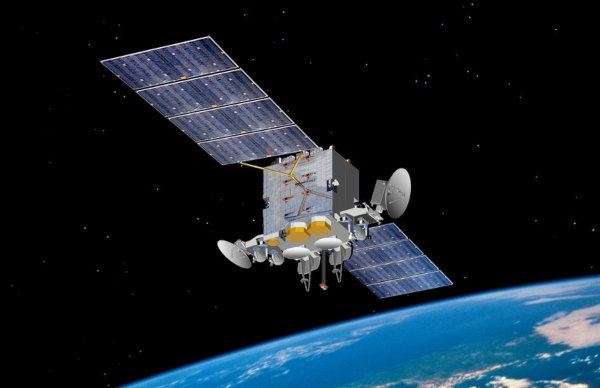
While the thought of a U.S. Space Force may conjure up ideas of space warships and laser guns, the reality is in the early days of USSF will primarily focus on monitoring satellites from potential threats.
Related Article – Platoon Size: How The US Army Is Organized
General Requirements

The Space Force shares administrative and organizational similarities with the Air Force.
Why?
The Space Force is getting created partly by members of AF Space Command.
Since the Air Force already serves as the “aerial and space warfare branch” of the U.S. Military, it will likely model its requirements after the branch.
General requirements of US Space Force should fall under the same basic standards of the five other military branches:
- You must be a citizen of the United States or resident alien.
- Age requirements are determined by current military enlistment and commissioning standards.
- Recruits must have a high school diploma or GED.
- You must pass a physical medical exam.
- You must meet height and weight requirements.
- Pass Physical Fitness standards comparable to the Air Force.
Additionally, the Space Force will have minimum Armed Services Vocational Aptitude Battery (ASVAB) test scores for its anticipated Military Occupational Specialities (MOS).
Specific job roles and qualification requirements have been refined over time as the Space Force has matured.
Regardless, you can expect the military branch to consider age, medical issues, or criminal history as possible deterrents to not qualifying.
If you would like to join the Space Force one day we recommend maintaining good health (physical and mental).
It will also help your cause to stay out of trouble and study to become the best student possible.
Related Article – Pros And Cons Of Joining The Air Force
Space Force Sign Up Process


The Space Force initially drew personnel from other military branches and has since formalized accession pathways.
However, we can predict that USSF will likely model its sign up process after the Air Force since it is the military branch most similar to the proposed USSF.
The U.S. Air Force has different processes for enlistment depending on if you plan to join as an enlisted airman or officer:
Space Force Enlisted Soldiers
It is anticipated that new enlisted soldiers of the Space Force will need to meet general requirements (listed, above).
Secondly, the Space Force will have its own Military Occupational Specialities (MOS) with expected ASVAB scores to qualify.
The specific Military Occupational Specialties and minimum ASVAB scores have yet to get announced.
Finally, new enlistees will need to go through a physical and mental screening.
The screening is conducted through a Military Entrance Processing Station (MEPS).
After meeting basic requirements and passing MEPS soldiers will likely enter the Delayed Entry Program (DEP).
They await further training assignments based on Space Force accession and training programs.
Related Article – Air Force Jobs List: A List Of All 135 AFSC’s In The Air Force
Space Force Officers
While the exact details have not been fleshed out you can anticipate that officers in the Space Force will have a few ways to join the force compared to the Air Force.
The sign-up process for USSF officers might include:
- Attending Officer Training School (OTS) after getting a college degree.
- Attending and graduating from the U.S. Air Force Academy, or a new academy created specifically for the Space Force.
- Joining an ROTC College program and completing the necessary requirements.
- Joining the Space Force as an enlisted soldier and working your way up to becoming an officer.
Once again nothing has been made official by the new U.S. Space Force yet we anticipate a model similar to the Air Force.
Duty Stations

In December 2019, Congress approved a proposal that will make the new Space Force part of the U.S. Air Force.
The proposal includes a budgeted $72.4 million for start-up costs, some of which may go toward establishing duty stations.
Currently, the Air Force has bases across the United States and the brand new USSF will likely borrow resources until it gets up on its own feet.
Air Force Space Command (AFSPC) is currently headquartered at Peterson Air Force Base in Colorado Springs, Colorado.
The site seems like logical headquarters for Space Force since Space Command already operates there and the Air Force Academy is right next door.
Peterson Air Force Base is also home to the North American Aerospace Defense Command (NORAD) and Northern Command (USNORTHCOM).
Headquarters locations have been addressed through official Department of Defense decisions over time.
Other Potential Locations


It has also been proposed that Space Force will consider the duty stations at Schriever Air Force Base (also in Colorado) and Vandenberg Air Force Base (California).
Schriever Air Force Base exists just east of Peterson Air Force Base and just outside Colorado Springs in El Paso County.
The base is reportedly being considered because Space Force plans to use the location as a spacecraft ground control base.
Furthermore, Space Force reportedly is seeking to use Vandenberg Air Force Base because of its satellite launching capabilities.
Vandenberg Air Force Base exists in Lompoc, California – near the Pacific Ocean and west of Bakersfield.
The space and missile testing base also sends satellites into orbit by using expendable boosters like Pegasus and Taurus, as well as reusable boosters like SpaceX Falcon 9.
However, none of these details are finalized and it is possible Space Force could have duty stations across the United States.
It will likely build its own as the program grows, however, it could be several years before that becomes a reality.
There have been discussions about future training institutions, though no formal academy plans have been announced.
Related Article – How Hard Is Air Force Basic Training?
What People Get Wrong About the Space Force
Many people believe the Space Force is a future or experimental organization, even though it is an established military branch.
It is often assumed that Space Force members operate primarily in outer space, when most roles are ground-based.
Some think the Space Force functions independently from other branches, despite close administrative ties with the Air Force.
There is also a misconception that civilians can freely apply to join at any time, similar to older military branches.
Another common misunderstanding is that all Space Force jobs involve combat, rather than technical and support roles.
Conclusion
The U.S. Space Force (USSF) is an exciting new concept that will introduce a military presence in space.
While the first few years of the program will mostly focus on research and establishing a new structure, it is feasible that one day you could join the military branch.
The initial focus of Space Force will center on protecting U.S. satellites yet the duties and expectations of soldiers will likely expand as other countries throughout the world take notice and also introduce their own programs.
Check back for the latest updates on U.S. Space Force!