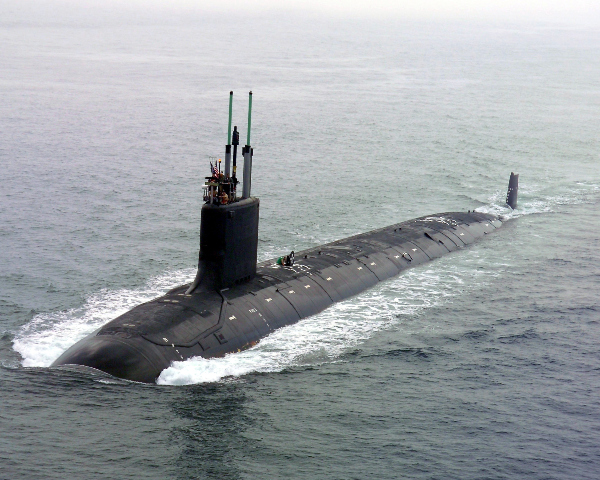
Fire Control Technicians (FT) are the Navy’s experts in maintaining and repairing the complex weapon control systems that enable submarines and surface ships to detect, track, and engage targets with torpedoes, missiles, and guns.
They specialize in fire control radars, sonar, periscopes, combat systems computers, missile guidance, torpedo tubes, and associated electronics aboard ballistic missile submarines (SSBN), attack submarines (SSN), and guided-missile destroyers/cruisers.
The rating involves deep electronics troubleshooting, calibration, preventive maintenance, and operational testing of classified systems under strict security and safety protocols.
FTs work in secure control rooms, torpedo rooms, and electronics spaces, often during long submarine patrols or high-tempo surface deployments, where precision directly supports mission success and platform survivability.
With Top Secret/SCI clearance required, this technical career demands analytical thinking, attention to detail, and the ability to perform under pressure in confined environments.
In this updated guide for 2026, we cover entry requirements, the training pipeline, typical duties, current pay structure, advancement opportunities, and how FT experience opens doors to strong civilian careers in defense electronics, systems engineering, and cybersecurity.
Related Article – US Navy Fire Controlman (FC) Rating
Education, Qualifications, and Training

Becoming a Navy Fire Control Technician (FT) is a little different compared to other Navy ratings, or military jobs.
Why?
Sailors cannot enlist directly into Navy rating FT immediately after enlistment.
Instead, service members must begin under the job field Submarine Electronics/Computer.
Once the sailor completes basic submarine school and the pipeline course, he or she gets received one of the Navy submarine ratings, including FT.
However, just keep in mind that no one is guaranteed a spot as a Fire Control Technician.
The Navy determines rating placement based on a need under the Submarine Electronics/Computer job field.
Related Article – Is Navy Boot Camp Hard?
Education
There are two basic educational requirements for joining the U.S. Navy.
A) You must have a high school diploma or GED equivalent.
B) You need to take the Armed Services Vocational Aptitude Battery (ASVAB), which is a series of tests that determine Navy rating eligibility.
Navy Fire Control Technicians (FT) must have a minimum ASVAB test score of 223 to qualify for the rating.
Sailors may qualify for Navy rating FT through a combined score of Arithmetic Reasoning (AR), Electronics Information (EI), General Science (GS), and Mathematical Knowledge (MK) on the ASVAB.
The other applicable ASVAB test score combination is Arithmetic Reasoning (AR), Mathematical Knowledge (MK), Mechanical Comprehension (MC), and Verbal Expression (VE).
Qualifications
Aspiring Navy Fire Control Technicians (FT) undergo a detailed background check for the qualification because they deal with sensitive information.
Therefore, you need to have a clean criminal record (including civil court convictions).
Normal hearing and color perception (no colorblindness) is also mandatory.
Secondly, the Department of Defense will perform a thorough background check examining your personal character and conduct.
Fire Control Technicians must receive top-secret security clearance from the DOD.
The Department of Defense will assess “moral turpitude” such as any history with alcohol or drug abuse.
Training
All new recruits of the U.S. Navy begin their military career at Recruit Training Command or boot camp.
Navy boot camp lasts eight weeks and introduces new recruits to the lifestyle and rules of the military branch.
Once you complete boot camp you’ll begin to focus training on your Navy rating.
As previously mentioned, sailors are not automatically assigned Navy rating FT.
The spot needs to get earned and rating placement in the Submarine job field is subject to availability and need.
Regardless, you will spend four weeks at the basic submarine school in Connecticut.
Then, you’ll spend an additional four months of training at the submarine learning center.
The learning center offers different technical and tactical training programs.
It is also possible to get selected by the Navy for more specialized “C” School Training before graduating from the program.
What does a Navy Fire Control Technician (FT) Do?

Navy Fire Control Technicians (FT) are important to submarine operations.
In general, Fire Control Technicians are responsible for the computer and control mechanisms on the submarine, including its weapons systems.
Navy rating FT make what the military branch defines as “intermediate level” maintenance:
- Perform organizational maintenance on submarine combat control systems and equipment.
- Operate submarine combat control systems.
- Test submarine combat control systems.
- Participate in weapons handling functions.
- Operate nontactical computer systems as well as peripherals.
There is no guarantee by the Navy for placement in Navy rating FT.
All new recruits enlist in Submarine Electronics and Computer Field (SECF).
The military branch will examine your test scores and performance and then assign you to one of the following training schools:
- FT (Fire Control)
- ETNAV (Navigation)
- ETR (Radio)
- STS (Sonar)
If you want job placement in FT you need to focus on your test scores in Basic Enlisted Submarine School (BESS) and Basic Apprenticeship Training (BAT).
Related Article – Navy Airman (AN): Career Details
What does a Navy Fire Control Technician (FT) make?

The Navy pays sailors based on military rank and years of service.
Consequently, your Navy rating factors very little into how much you will receive from the military branch each month.
| Insignia | Pay Grade | Rank | Abbreviation | 2026 Minimum Monthly Pay (<2 Years) |
|---|---|---|---|---|
| N/A | E-1 | Seaman Recruit | SR | $2,407.20 (after 4 months; $2,225.70 for first 4 months) |
 | E-2 | Seaman Apprentice | SA | $2,697.90 |
 | E-3 | Seaman | SN | $2,836.80 |
 | E-4 | Petty Officer Third Class | PO3 | $3,142.20 |
 | E-5 | Petty Officer Second Class | PO2 | $3,342.90 |
 | E-6 | Petty Officer First Class | PO1 | $3,401.10 |
 | E-7 | Chief Petty Officer | CPO | $3,932.10 |
 | E-8 | Senior Chief Petty Officer | SCPO | $5,656.50 (starts at over 8 years) |
 | E-9 | Master Chief Petty Officer | MCPO | $6,910.20 (starts at over 10 years) |
 | E-9 | Fleet/Command Master Chief Petty Officer | FMCPO/CMCP | $6,910.20 (starts at over 10 years) |
 | E-9 | Master Chief Petty Officer of the Navy | MCPON | $6,910.20 (starts at over 10 years) |
Benefits
The U.S. Navy offers benefits with its monthly salary:
- Medical Insurance
- Vacation Time
- Special Pay
- Retirement
- Affordable Life Insurance
- Education: Sailors can earn full-tuition, merit-based scholarships, allowances for books and fees, plus an annual stipend for living expenses.
- Housing: Allowances for living expenses, utilities, and maintenance.
- Food: Allowance for the on-base dining hall and access to tax-free department and grocery stores.
Job Reviews
There are not a ton of job reviews available online specific to Fire Control Technician (FT).
However, you can find a few on Indeed.com related to Navy submarine jobs in general.

Expect long days and hard work, however, enlisting in the military can provide you opportunities to a better future not always available if you are trying to do it on your own.

Fire Control Technicians (FT) get an incredible opportunity to perform work on not your typical piece of equipment and also get to see the world.
The opportunities for experience and personal growth are second to none.

Related Article – Navy Ships Serviceman (SH): Career Details
Civilian Job Opportunities
The work performed by a Navy Fire Control Technician (FT) is pretty specific to the military considering job duties are done on submarines.
Therefore, it is a little more difficult for former Fire Control Technicians to find relevant employment in the civilian world.
Even if you may never work on submarines again the mechanical and technical skills you receive can translate to other types of technical careers.
The Navy is excellent with building character and discipline which is why many employers are quick to hire veterans because of their work ethic and integrity.
What People Get Wrong About US Navy Fire Control Technician (FT)
Many assume Fire Control Technicians primarily operate weapons or sit in front of consoles during engagements.
In reality, FTs focus on maintenance and repair: troubleshooting circuit cards, aligning sensors, calibrating fire control computers, testing torpedo guidance, and performing depot-level repairs on classified systems; operational use is secondary to keeping equipment fully mission-capable.
Another misconception is that the job is low-physical-demand with most work in air-conditioned spaces.
FTs frequently work in tight submarine compartments, climb into torpedo tubes, handle heavy components, and conduct repairs during patrols or surface ship deployments in varying conditions where quick fixes are critical to operational readiness.
People often think entry requires advanced electronics knowledge or a college degree.
The Navy trains you comprehensively; requirements include ASVAB line scores (AR+MK+EI+GS=222 or VE+AR+MK+MC=222), U.S. citizenship, Top Secret/SCI clearance eligibility, normal color perception, and meeting physical/security standards—no prior experience or degree needed.
Some believe training is brief or lacks depth compared to other technical ratings.
After boot camp, FTs complete a preparatory course followed by “A” School (about 20-24 weeks at Groton, CT or other sites) covering electronics fundamentals, fire control theory, sonar, radar, and combat systems, then “C” School (additional 10-20+ weeks) for platform-specific training on Trident, Virginia-class, or surface weapon systems.
Finally, a common view is that civilian transitions are narrow due to high classification.
FT skills in advanced electronics repair, systems integration, troubleshooting classified hardware, and security clearance translate to high-paying roles with defense contractors (Lockheed Martin, General Dynamics Electric Boat), intelligence agencies, cybersecurity firms, or aerospace companies, often starting strong with certifications and submarine/surface experience.
Understanding these aspects helps candidates prepare for a highly technical, secure, and impactful career supporting naval strike and deterrence capabilities.
Summary
A Navy Fire Control Technician (FT) is involved with the maintenance and repair of specialty submarines.
Sailors are responsible for the administrative and operational duties of the submarine computer and control systems.
While there is no guarantee that you’ll receive the official job title or Navy rating of Fire Control Technician (FT), with hard work anything is possible.
All new recruits begin basic submarine training and based on performance and test scores, the Navy may assign you to FT or another submarine type of rating.
Resources:
