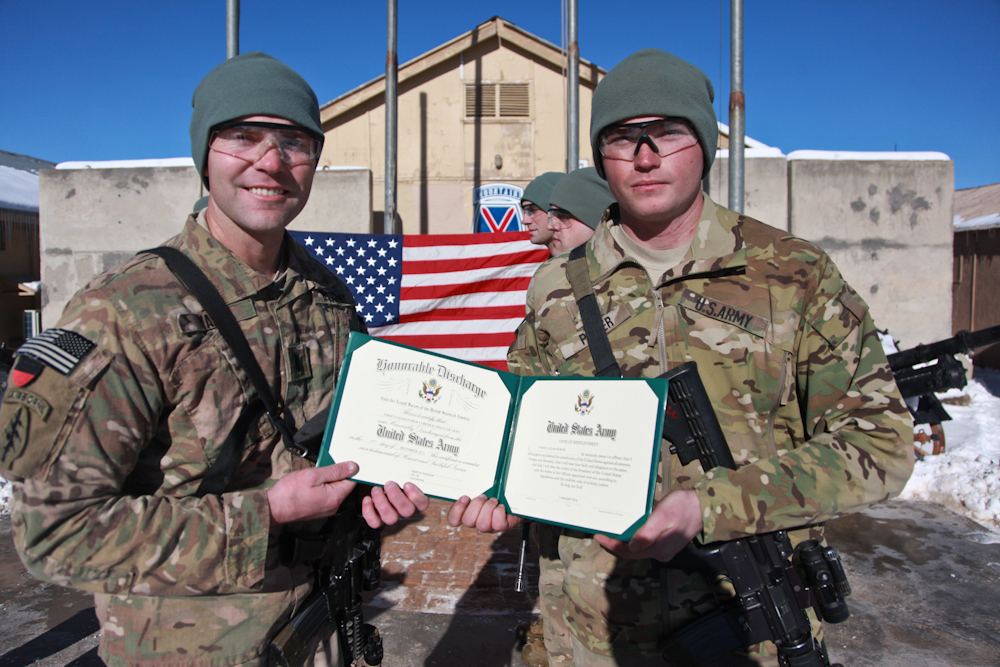
A General Discharge is an administrative separation from the military issued when a service member’s performance was considered satisfactory overall but did not meet the standards required for a fully Honorable Discharge.
This type of discharge falls between an Honorable Discharge and an Other Than Honorable Discharge in terms of severity.
While it is not considered punitive and does not involve a court-martial, it can still affect certain veterans’ benefits and future opportunities.
Not sure how this discharge compares to other military separations?
See our complete guide to types of military discharge to understand every classification and how they impact veterans after leaving the service.
Below we explain what a General Discharge means, the most common reasons service members receive it, and how it can affect benefits, reenlistment eligibility, and civilian life.
1. What is a General Discharge?

A general discharge is an administrative discharge for those who served with faith but ran into some difficulties.
Typically, this discharge comes after nonpunitive corrections were not successful in changing behaviors that get in the way of meeting military expectations.
Essentially, the service member performed adequately but is not a good long-term fit to be a member of the armed forces.
Related Article – 8 Types of Military Discharge
2. General Discharge vs. Honorable Discharge
An honorable discharge is the highest level of discharge a service member can receive. It means the expected duties were well-performed, and the member was faithful to their assigned duties.
A general discharge is considered an administrative discharge.
Each branch of the military has different administrative reasons for this particular discharge.
When a service member receives their separation paperwork, the reasons are typically specific and stated on the paperwork.
Also, a service member’s DD Form 214 will report the discharge with the reasons.
Lastly, there are a couple of different versions of this discharge, including a ‘General Discharge Under Honorable Conditions’ and a ‘General Discharge Other than Honorable Conditions.’
3. General Discharge Under Honorable Conditions?
A General Discharge under honorable conditions means the service member performed satisfactorily overall but did not fully meet the standards required for an Honorable Discharge.
This classification often reflects minor disciplinary issues, failure to meet certain performance standards, or difficulty adapting to military life.
In general, this type of discharge shows satisfactory service.
4. What is an Other Than Honorable Discharge?

An Other Than Honorable Discharge is not as favorable.
Typically, this type of discharge means you struggled to meet expectations for conduct and performance and show a pattern of behavior that is not in line with a service member’s expectations.
Generally, this administrative discharge is due to the following problems:
- Abuse of power
- Serious issues with conduct
- Court-martial conviction without punishment
- A pattern of continued abuse of power or misconduct
- Fraternization
Related Article – Honorable Discharge: 8 Things You Might Not Know
5. Why Would Someone Get a General Discharge?
Several issues lead to this administrative Discharge.
In some cases, the discharge is due to not maintaining expectations in the following areas:
- Dress and appearance
- Fitness and weight
- Success in completion of training
- Minor issues with discipline
6. General Discharge Benefits
Veterans who receive a General Discharge under honorable conditions may still qualify for many benefits administered by the Department of Veterans Affairs.
Because the service was considered satisfactory overall, certain programs remain available even though the discharge was not fully honorable.
Many veterans with a General Discharge can still qualify for VA disability compensation, VA healthcare for service-connected conditions, home loan guarantees, and certain insurance programs.
These benefits are designed to support veterans whose military service resulted in injuries or long-term health conditions.
However, some important benefits are restricted. For example, the Post-9/11 GI Bill and other VA education programs generally require an Honorable Discharge.
This means veterans with a General Discharge may need to pursue other financial aid options when continuing their education.
Eligibility for specific programs may also depend on additional factors such as length of service, service-connected disability status, and the reason for separation.
7. General Discharge Downsides
As with many other types of discharges, there are disadvantages to a general.
Often, those who do not understand the discharge criteria may not understand a General Discharge is something else entirely from a Dishonorable Discharge. Even though this perception is false, it is hard to overcome the stigma.
Also, you are disqualified from Education benefits through the VA.
8. How a General Discharge Affects Civilian Employment
A General Discharge can sometimes create challenges when transitioning to civilian employment.
While many employers understand that this discharge is administrative rather than punitive, it can still raise questions during the hiring process.
Some government positions, law enforcement roles, and security clearance jobs may review discharge status carefully.
Because a General Discharge indicates that a service member did not fully meet military expectations, employers may ask applicants to explain the circumstances surrounding their separation.
That said, many veterans with a General Discharge go on to have successful civilian careers.
Employers often value military experience, leadership skills, and technical training regardless of the exact discharge characterization.
Veterans can improve their employment prospects by highlighting transferable skills, certifications, and accomplishments earned during their time in service.
In many cases, providing a clear explanation of the discharge and demonstrating a strong work history after leaving the military helps employers focus on the veteran’s qualifications rather than the separation classification.
Related Article – Other Than Honorable (OTH) Discharge Explained
Frequently Asked Questions About General Discharge
We answered some of the most asked questions revolving around a General Discharge.
8. Can You Get a Job with a General Discharge?
You can seek employment as a civilian in the private sector.
Also, you may apply for a Federal Civil Service job, as well. Because the job application is based on points, your discharge earns you ten points for job considerations.
9. Can a General Discharge Be Upgraded to Honorable?
There are options for changing the discharge.
You may consider the Discharge Review Board if you feel your discharge was not proper or equitable under the law.
For instance, a veteran might suffer from post-traumatic stress disorder (PTSD), and the disorder is the reason for the behaviors that caused the discharge in the first place.
When you apply for reconsideration, you need to prepare your explanation and statements from others you served in the military and current character references.
You will also need records of your educational background and proof you are in good standing financially and in your conduct as a civilian.
10. Can You Rejoin the Military with a General Discharge?
Yes, if you have a general discharge, you may reenlist.
Although, if your discharge includes details regarding a pattern of minor discipline problems, you may have to explain.
11. Does a General Discharge Show Up on a Background Check?
Most civilian employers will not automatically see a veteran’s discharge status on a standard background check.
However, some employers, especially government agencies, law enforcement departments, and security-related positions, may request a copy of the DD-214 during the hiring process.
In those cases the discharge classification may be reviewed as part of the application.
Related Article – GM Military Discount
What People Get Wrong About General Discharge
Many service members believe a General Discharge is basically the same as an Honorable Discharge with only minor differences.
In reality it is significantly different.
A General Discharge makes you ineligible for many VA benefits, including the GI Bill and certain disability compensations, while an Honorable Discharge preserves nearly all benefits.
Another frequent misunderstanding is that a General Discharge only happens after serious misconduct.
Most General Discharges result from patterns of minor disciplinary issues, failure to meet standards, or inability to adapt to military life rather than one major offense.
Some veterans assume they can easily upgrade a General Discharge to Honorable later.
While upgrades are possible through the Discharge Review Board, success rates are low and require strong evidence that the original characterization was unjust or inequitable.
Many people think that once they receive a General Discharge their military service is completely erased from their record.
Your time in service still counts toward Social Security and some retirement calculations, but the negative characterization follows you on background checks and can limit employment options.
A common error is believing that a General Discharge has no impact on civilian jobs.
Many employers, especially in government, law enforcement, and security fields, view it unfavorably and may ask for an explanation or reject the application outright.
Finally some assume that if they receive a General Discharge they lose all benefits immediately.
You actually retain some earned benefits such as retirement points already accrued and certain medical coverage for conditions incurred during service.
However the majority of VA programs become unavailable.
Clearing up these misconceptions helps service members understand the real weight of a General Discharge and motivates them to maintain strong performance throughout their career in 2026.
Other Types of Military Discharge
- Honorable Discharge
- Other Than Honorable Discharge
- Bad Conduct Discharge
- Dishonorable Discharge
- Hardship Discharge
Conclusion
The moment a service member separates from the military is the time of discharge.
The circumstances leading up to the separation determines the type of discharge.
A general discharge is administrative in nature and reserved for those who serve with good faith and intentions.
However, those members may not meet the requirements and expectations of their branch of the military.
Therefore, they earn a general.
If you receive this type of discharge, you receive nearly all the same benefits as someone with an honorable discharge, with the exception of VA Educational benefits.
However, there if there are mitigating reasons that explain the behaviors that prompted the discharge, you can submit an appeal to a board for reconsideration.
References:
See Also:
Bad Conduct Discharge Explained