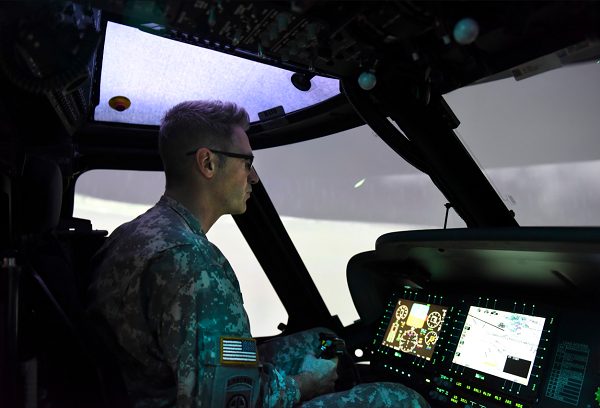
The Selection Instrument for Flight Training, commonly referred to as the SIFT, is an assessment used by the U.S. Army.
The test is required for soldiers applying to the Army Warrant Officer Flight Training program.
It evaluates aptitude, aviation knowledge, and related cognitive skills.
SIFT scores are used as part of the overall selection process for aviation training.
This article outlines test preparation considerations and commonly discussed strategies.
Table of Contents
SIFT Test Prep Strategy #1: Practice Test

The very first strategy for doing will is taking a SIFT practice test.
The practice test will give you a clear picture of which areas of knowledge need the most work.
Also, taking practice exams to increase your stamina for timed tests.
Therefore, you must take your test in the same timed conditions you expect for the test day.
Furthermore, the practice helps with mental agility, which is critical for an exam such as the SIFT.
SIFT Test Prep Strategy #2: Build your Strength
When you fully understand which areas on the SIFT are most challenging, you can lay out a study plan focusing on your highest areas of need.
Ideally, you start with two to three of the most critical areas of learning and spend your scheduled study time focusing on those areas.
As those skills build, you can go back to practice tests to see where you are and refocus on new areas of academic growth.
SIFT Test Prep Strategy #3: Real-World Application
Do not just study; flight simulators take the studying and give it a practical application making the test easier.
The more time you can spend in a flight simulator practicing, the better your performance on the SIFT.
It might be surprising, but there are several creative ways to build hand and eye coordination, accuracy, and attention to detail.
For instance, many video games that improve spatial awareness are aviation-related, so it is worth checking out how you can get some flight simulation work done in video games.
Also, since you will take a hidden figures subtest that includes the acuity to find objects hidden within several other objects, any game requiring attention to detail and quickly finding hidden items will help.
Related Article – 12 ASVAB Tips and Tricks to Help You Get the Best Score
SIFT Test Prep Strategy #4: Understanding the Sections
There are different subtests with their own time limits on the SIFT.
Simple Drawings
There are 100 questions to answer within two minutes for the Simple Drawings subtest.
It is vital to work fast and not second guess yourself.
You may not have time to answer all the questions, but your score relates to how many you got right compared to the amount you get wrong.
It is within your best interest to be right for as many questions as possible rather than answering all of them by guessing.
Hidden Figures
The Hidden Figures portion of the SIFT covers 50 questions over five minutes.
Just like the Simple Drawings, you want to be accurate and quick.
Do not guess and understand that it is better to leave questions unanswered than to answer them all with too many inaccuracies.
Army Aviation Information Test
The Army Aviation Information Test covers 40 questions within 30 minutes.
This portion of the exam tests your level of knowledge in rotary-wing aircraft components, aerodynamics, rotary-wing maneuvers, as well as general knowledge.
You do not want to leave any of these questions unanswered.
Therefore, answer the questions on which you are most confident.
Then, make educated guesses for the remaining questions.
Spatial Apperception Test
For the spatial test, you have an opportunity to show you can recognize changes in altitude or the position of an aircraft simply by seeing the ground or horizon from a cockpit.
You select the sketch that shows the view from the cockpit.
Also, this test is 25 questions, and you should approach it like the Aviation subtest and not leave questions unanswered.
Furthermore, you have 10 minutes to answer these questions.
Lastly, the spatial test falls under the SIFT’s cognitive Test, which is a separate composite.
Reading Comprehension
There are 20 questions over 30 minutes that test your ability to comprehend and pull out specific information from a text.
Like the spatial test, the reading comprehension test contributes to the Cognitive composite.
Math Skills
The math skills portion covers how well you use arithmetic and your aptitude for mathematical concepts.
The math portion also contributes to the Cognitive composite score.
Mechanical Comprehension Test
The final subtest that contributes to the Cognitive score is the Mechanical Comprehension subtest.
This portion of the SIFT lets the Army know how well you understand mechanical sciences.
Related Article – AFOQT: 7 Incredible Tips To Help You Score High
SIFT Test Prep Strategy #5: Taking Timed Tests
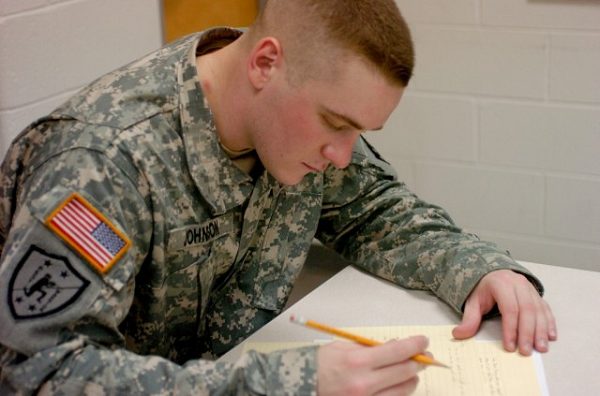
Many sections are timed, as noted above.
Therefore, when you take your practice exams, it is vital to time yourself.
The practice of self-timing helps you build mental agility, calms your nerves, and gives you a better idea about which sections you can do well while under pressure.
Plus, as you practice and study, your stamina for high-pressure exams grows, which leads to a higher score.
What People Get Wrong About SIFT Test Prep
Some people believe the SIFT primarily measures memorized aviation facts.
The test also evaluates cognitive aptitude, spatial awareness, and mechanical reasoning in addition to aviation knowledge.
Another common misunderstanding is that studying aviation alone is sufficient for a competitive score.
Several sections focus on mental processing speed, accuracy, and adaptability under time constraints.
Some assume the SIFT can be retaken freely if the initial score is not satisfactory.
Retake opportunities are limited and subject to strict waiting periods and eligibility rules.
There is also confusion about how the test is scored.
The SIFT uses adaptive components that adjust question difficulty based on performance.
Some people believe test preparation guarantees a specific score outcome.
Preparation may improve familiarity with question formats but does not ensure a particular result.
Others assume all sections are weighted equally.
Different subtests contribute differently to composite scoring categories.
Frequently Asked Questions (FAQ)
We address some frequently asked questions regarding SIFT practice tests below.
What is a good score on the SIFT Test?
Before discussing scores, it is essential to understand there are adaptive portions of the exam.
The first five sections have time limits, as indicated above.
However, the last two sections, which are math skills and mechanical comprehension, have varied questions.
The test is computer-based, and the test figures out your strengths and adjusts to get a complete picture of your abilities.
While the number of questions varies, there is 40 minutes for the math skills portion and 15 minutes for the mechanical part of the SIFT.
SIFT scores range from 20 to 80, with minimum qualifying scores set by program requirements.
How many times can I take the SIFT test?
In your entire life, you can take the SIFT twice.
However, you must wait 180 days between tests.
You can only take the test a second time if you did not meet the first attempt’s minimum expectation.
For example, if you score a 40 the first time, you meet the minimum, and you cannot retake the SIFT.
How long should I plan to study and prepare?
While the amount of time necessary to study depends on a couple of factors.
For instance, if you take the SIFT practice test and realize you have several areas to improve, you will want to give yourself several months to study.
Also, the more time you have, the more prepared you are to meet the demands of a timed test.
Therefore, take your first practice test as early as possible to optimize your score and career prospects.
Related Article – How to Prepare Physically for Navy Boot Camp
Conclusion
Those who wish to advance their careers and become an officer in aviation must take the SIFT test.
Those who meet the expectations of the SIFT are considered for the Army Warrant Officer Flight Training program.
In order to be best prepared, you should first take a SIFT practice test.
Next, build up your weakest areas of knowledge through studying and real-world application practice.
Also, by understanding the test’s sections and how they are timed, you can better prep by practicing under the same testing conditions.
Since you can only take the test twice, and only if you fail the first time, it is vital to prepare and do well.
References:
See Also
Army Helicopter Pilot Requirements
Becoming a Pilot in the Air National Guard (ANG)
Military Pilot Vision Requirements
How to Prep for Army Ranger School (RASP)