
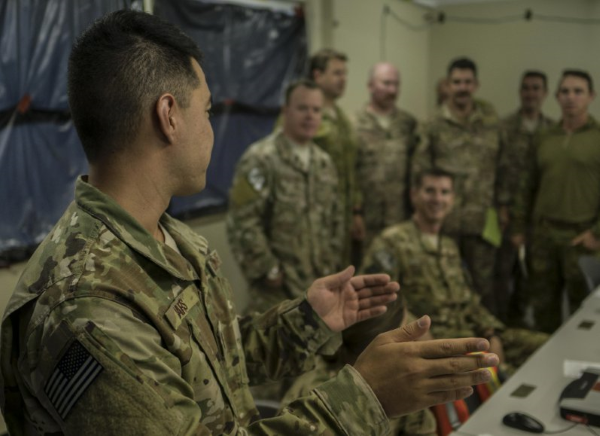
Air Force Operations Intelligence Specialist (1N0X1) is one of the most intellectually demanding enlisted careers in the Air Force.
These airmen analyze enemy capabilities, track threats, and deliver real-time intelligence that directly supports combat operations and national security decisions.
It is a job that combines advanced analysis, technical systems, and the ability to brief senior leaders under pressure.
This 2026 guide explains exactly what the 1N0X1 career field involves, the full training pipeline, daily responsibilities, pay, and the realities of the job so you can decide if it is the right fit.
Related Article – 10 Best Air Force Jobs For Civilian Life
What People Get Wrong About Air Force Operations Intelligence (1N0X1)
Many applicants assume Operations Intelligence is basically a desk job where you sit and read reports all day.
In reality it is a fast-paced role that often involves shift work, high-pressure briefings, and frequent deployments alongside fighter squadrons, special operations teams, or joint commands.
The work is mentally intense and requires quick thinking in dynamic situations.
Another common myth is that you need a college degree or prior intelligence experience to succeed.
The Air Force trains you from the ground up at Goodfellow AFB.
A strong ASVAB score and the ability to handle classified information matter far more than previous education.
Many people believe the job is purely analytical and has no physical demands.
While it is not as physically demanding as combat arms, 1N0X1s must maintain excellent fitness standards, deploy to austere locations, and sometimes work in high-threat environments with limited support.
Some recruits think once you finish tech school you will immediately be doing high-level strategic analysis.
New 1N0X1s usually start with foundational tasks and gradually move into more complex analysis as they gain experience and clearances.
A frequent error is assuming the career field has limited advancement.
In reality experienced 1N0X1s often move into senior analyst roles, instructor positions, or cross into joint intelligence communities with excellent promotion opportunities.
Finally many assume the job is the same across all units.
Daily work varies greatly depending on whether you are assigned to a fighter wing, a reconnaissance squadron, or a major command headquarters.
The mission and tempo change dramatically by assignment.
Understanding these realities helps applicants approach the 1N0X1 career with accurate expectations and gives them the best chance to thrive in 2026.
Jump To A Section
Air Force Operations Intelligence Requirements and Qualifications
In order to enter into this Air Force specialty, these conditions and requirements must be strictly met.
Educational Requirements
- High School Diploma
- GED
- GED with 15 college credits
ASVAB Requirements
- Minimum ASVAB Score of 64 in the Administrative category
Additional Qualifications
- Be between the ages of 17 and 39
- Must not have any noticeable speech disorders or other communication deficiencies
- Having background knowledge in such subjects as geography, algebra, geometry, and trigonometry is desirable but not required
- Be able to lift 40 lbs.
- Successful completion of 7.5 weeks of Air Force Basic Military Training held at Joint Base Lackland in San Antonio, TX (Not required of those with prior military experience or training)
- Completion of a current Single Scope Background Investigation (SSBI) that leads to an airman being able to receive a Top-Secret level security clearance
Once all of these conditions have been met, an airman will then proceed to their next duty assignment to commence technical training.
Training and Career Path to Become an Air Force Operations Intelligence Specialist
In order to assume a position in this Air Force Specialty many hours of study and on-the-job training are required.
They are as follows:
Air Force Technical Training Information
To become an Air Force Operations Intelligence Specialist, one has to complete a very demanding technical training course of study.
This training takes place at Goodfellow AFB in San Angelo, Texas which is located about 200 miles northwest of the San Antonio area.

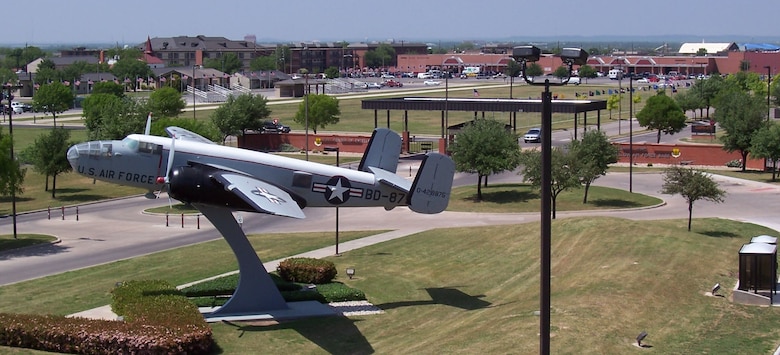
During this time, the airman will be under the guidance of the 17th Training Wing (17TRW) that’s part of the Air Education and Training Command.
It’s a technical training course that is above average in length when compared to many other Air Force jobs.
The course itself takes five to six months to complete.
It’s not unusual for an enlisted member to participate in this course alongside members of other branches of the United States armed services
Approximately half of the way through technical training school, an airman will be made aware of their next duty station.
They will report to this next duty assignment once they have successfully completed all of the technical training course requirements.
Once an airman completes technical training for this Air Force career field, they will also receive college credits toward a Community College of the Air Force degree in Intelligence Studies and Technology.
On the Job Training
After arriving at the next duty station, several weeks of on-the-job training will then commence.
This on-the-job training will usually consist of several weeks of close supervision by senior enlisted Operations Intelligence personnel.
Once this senior enlisted member is satisfied with the proficiency in Operations Intelligence that the airman has shown, they will then allow that airman to be integrated into their unit’s normal workforce.
How Much Are Air Force Operations Intelligence Specialists Paid?
As with all military jobs, there is a set pay scale that is based on both rank and time in service for an Air Force Operations Intelligence Specialist.
Related Article: Which Branch Of The Military Should I Join? 7 Things To Consider
Unless someone entering this career field has prior military experience, they will most likely be classified as Airman Basic (E-1), Airman (E-2), or Airman First Class (E-3) with less than two years of service to start with.
The higher enlisted ranks such as Airman (E-2) and Airman First Class (E-3) are awarded based on the completion of college courses or work experience relevant to this career field.
A person’s recruiter will talk to them more about their starting pay grade.
The pay scale for enlisted Airmen with less than two years of prior military experience is as follows:
| Insignia | Pay Grade | Rank | Abbreviation | 2026 Minimum Monthly Pay (<2 Years) |
|---|---|---|---|---|
| E-1 | Airman Basic | AB | $2,397 (after 4 months; $2,217 for first 4 months) | |
 | E-2 | Airman | Amn | $2,687 |
 | E-3 | Airman First Class | A1C | $2,826 |
 | E-4 | Senior Airman | SrA | $3,130 |
 | E-5 | Staff Sergeant | SSgt | $3,116 |
 | E-6 | Technical Sergeant | TSgt | $3,401 |
 | E-7 | Master Sergeant | MSgt | $3,932 |
 | E-8 | Senior Master Sergeant | SMSgt | $5,657 (starts at over 8 years) |
 | E-9 | Chief Master Sergeant | CMSgt | $6,910 (starts at over 10 years) |
 | E-9 | Command Chief Master Sergeant | CCM | $6,910 (starts at over 10 years) |
 | E-9 | Chief Master Sergeant of the Air Force | CMSAF | $6,910 (starts at over 10 years) |
This is what’s considered to be base pay.
Miscellaneous Pay and Incentives
In addition to a person’s base pay, there are also other forms of pay and incentives that an airman may be eligible for.
These include such things as:
- Housing allowance for those authorized to live off base (BAH)
- Subsistence allowance (Food – BAS)
- 100% paid healthcare
- Tuition Assistance for college
- Temporary duty pay, which covers extra expenses incurred when on a temporary assignment to another duty station
- Cost of living incentive for being based in higher living cost areas
There are also other pay and incentives determined by an individual airman’s specific job situation.
Related Article: Air Force Ranks And Pay
What’s Life Like as an Air Force Operations Intelligence Specialist?
If someone enters into this career field, they will lead a somewhat normal life.
The term “somewhat normal” is used because as an Air Force Operations Intelligence Specialist, there is always the chance that one will get called in on a moment’s notice to produce an urgently required intelligence report or to support an item to be presented at a current intelligence briefing.
There is also a very good probability with this career field that a person will have to cover shifts on nights and weekends.
After all, the Air Force intelligence community has to always be prepared to assess and report on current threats in the world.
Other than these things or an occasional temporary duty assignment, an Air Force Operations Intelligence Specialist can lead a pretty normal life in peacetime.
It would be considered a decent Air Force specialty for those that are married and/or have children but not an ideal one, because of the shift work and on-call duties involved.
Related Article – Military Child Care: 8 Great Options
Normal life in this type of Air Force career includes:
- The opportunity to participate in base-sponsored sports and recreation
- The ability to take advantage of reduced prices at base shopping facilities
- Use of the gyms, sports courts, bowling, swimming, and golf facilities that exist on many large Air Force Installations
- Weekly days off and 30-days leave with pay each year
Enlisted personnel may also be allowed to attend college courses in their off time in pursuit of a degree.
Job Reviews
Those who have served actively as Air Force Operations Intelligence Specialists have generally enjoyed their jobs and have had good things to say about their experiences.
They also have suggested there is a good chance that having experience in this career field can lead to gainful civilian employment.
Here are a few reviews from Indeed.com written by those who have spent time in the Air Force as an Operations Intelligence Specialist:

Air Force Operations Intelligence Civilian Career Opportunities
It may surprise you to learn that there are several job specialties in the civilian world that can use the services of a well-trained Air Force Operations Intelligence Specialist.
Here are a few examples of those civilian positions.
Closely Related Government Intelligence Jobs
Here are some government agencies that have positions that are very closely related to an Air Force Operations Intelligence career.
In all probability, an Air Force Operations Intelligence Specialist will even have coordinated efforts with a member of one of these government agencies at some point in time during their military career.
The biggest advantage when going to work for a government agency after serving in the Air Force is that military time counts towards pay and retirement in most cases.
- Defense Intelligence Agency Washington, D.C.
- National Imagery and Mapping Agency (NIMA) Springfield, Virginia
- Department of Homeland Security
These jobs go by what is known as a General Schedule (GS) pay scale.
Ex-Air Force Operations Intelligence personnel can expect a GS pay level that will pay them somewhere between $35,000 – $70,000 a year and comes with benefits too.
Civilian and Government Job Opportunities
Possessing a current Top Secret level security clearance is a valuable commodity to have when it comes to employment.
That and a little of the right know-how can land an ex-Air Force Operations Intelligence Specialist a good-paying civilian job.
Here are some companies that are known to hire former Air Force personnel that possess a Top Secret Security Clearance:
- Boeing Aerospace Company Chicago, IL
- General Dynamics Corporation Falls Church, VA
- Raytheon Company Waltham, MA
- Rand McNally Chicago, IL
These types of jobs typically start out anywhere between $45,000 – $80,000 a year.
References:
Official Air Force Recruiting Page
Air Force Reserve Official Page
